Stories from the streets and la clinica

I found this document by accident in a random place on my computer. Reading this over now I am struck by how religious I was when I was writing then. I recall that almost everyone I knew who was involved in refugee health at the street or community level was religious or seriously humanist. We were all doing the best we could.

————————

These are dedicated with gratitude to our volunteers – without whom the clinic and mission could not happen. Some dates are inexact. Last update 5/2005
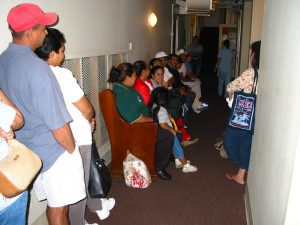
Waiting for clinic to open

Witness: Every Wednesday at Zaragoza Elementary school we hold parent education classes in the front of the school cafeteria. Every week during those classes the school brings in special needs students to the back of the cafeteria for breakfast. By special needs, I mean those with Down syndrome and other such problems. Week after week, month after month, and now, year after year these children are a witness. What witness?

  • Of the children themselves, setting out on a long and difficult journey, of which they have no knowledge and few resources … the girl in the wheelchair, a beautiful and haunting sight; the boy who struggles with his walker and his limitations; the girl with Down syndrome whose laugh sounds so normal; the tall thin girl, kind of staggering and lost …
  • Of the caregivers and teachers who, with consistent (and unsentimental) kindness, care for children who at times are not easy to care for and in so many ways are disconnected.
  • Of the parents, bringing their tragic children to this school, this place of Hope … last week, a big handsome man, waving and smiling with love at his darling girl with Down syndrome.
  • Of a society that tries to care for the least of these.

So, here’s to you, children, caregivers, parents, and school (and the society it represents and teaches). Thank you for showing me this love and beauty. Last week, right before we left Zaragoza, Cesar Termulo, a fine young doctor who gave the class that week said to me, “Right now, prayer is of utmost importance.”

Trust in Him at all times, O people; pour out your hearts before Him; God is a refuge for us. Psalm 62:8

Blessed are the poor in spirit, for theirs is the kingdom of heaven. Blessed are those who mourn, for they shall be comforted. Blessed are the meek, for they shall inherit the earth. Blessed are those who hunger and thirst for righteousness, for they shall be satisfied. Blessed are the merciful, for they shall obtain mercy. Blessed are the pure in heart, for they shall see God. Matthew 5:3-8

Take heart daughter; your faith has made you well … Matthew 9:22
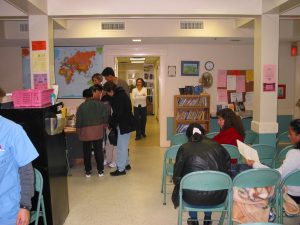
Waiting room

Amen (10/2004)

Going back to the question of eternal things … this is written by Lindsey, a high school student who is one of the Agape volunteers: Three friends and I stayed at, and worked in, the Long Yan Orphanage with the 17 special needs kids. They ranged in age from 4 to 18, and there were only 2 Chinese nannies per 12 hour shift to watch over them. Most of the kids didn’t have names. We gave them each a name that seemed to fit – Jason, Isaac, Daniel, even Bo. I will tell you about one of the 17 who won our hearts; we named her Annie. She thirteen years old, but was unable speak, sit up, or move from her wooden pallet. She was painfully thin and always restless.

We thought she was severely retarded and unable to understand us, but still we sat with her and talked to her, just to pass time. One afternoon after we’d been there about a week, Jessa, my good friend who lives in China and speaks Chinese fluently, was sitting with Annie just talking to her. As she switched from English to Chinese, she saw Annie become very alert, looking up at her with her brown eyes. She asked, “Annie, can you understand me? If you can understand me, open your mouth.” Slowly, Annie did so.

After that, she and Jessa worked out a system of communication and Jessa could get Annie things she specifically wanted. And every day, Jessa told Annie about Jesus.

The last day we were there, Jessa was sharing the gospel with Annie again. She decided to ask Annie if she wanted to pray and receive Christ. When she asked her if she wanted to, Annie opened her mouth- her way of saying yes. Jessa led her through a simple prayer and when she said, “Please forgive my sins and come into my life.” Annie began crying and crying. After a time, she calmed down and was filled with a peace I had never seen in her before. Jessa told her, “Annie, you’re my sister now. I’ll see you in heaven!” Annie looked up at her and squeezed her hand really hard.
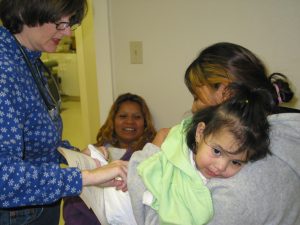
Bobbie Baxter, MD, Agape founder and medical director

After I got home, I learned that Annie died three days after we left the orphanage.

Meeting Annie changed my life. I can’t wait to see her again in heaven. All the orphans taught me more about God’s heart. Since I’ve been home, I’ve found so many verses in Scripture about how He cares for the helpless, for the fatherless. One of my favorites is Psalm 10:17-18, “You hear, O LORD, the desire of the afflicted; you encourage them, and you listen to their cry, defending the fatherless and the oppressed.”

(I know Jessa & Lindsey will take no credit for what happened, but I want to note that however it happened, they heard, encouraged, and defended the afflicted with hope where there was no hope.)

Grace: At la clinica we started this week doing physical exams on children just removed from their family(s) because of abuse. Case workers from the residential facility where the children will live (Jonathan’s Place) bring new children to Agape for their intake physical. There were 13 last week, but I expect fewer next week. It’s strong. Because in Texas, it takes a lot of abuse for a child to be removed from a home, what with all our “family values” – yeah, right. As much as the children, this is for the staff at Jonathan’s Place. What follows is from an email I sent to my son after the first day:
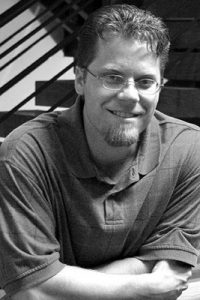
Chris Wynn, our chaplain, now gone to Colorado, fall 2004

“So when I was writing (to someone else) I was thinking I wanted to tell you. But since its you, I’ll say more: The people (caseworkers) that were with the children were all young (of course): Katy has been at it for three years & is very intense & real; Keisha started two months ago – shy, nice; Ashley came in late – she feels really solid. Sometimes I wonder, what did I do to deserve this – to be around people like this. Not to lay religious on you, but it can’t be anything but grace. And isn’t that a beautiful idea. End of email. The second day there were eight more children. This time Chris, a young man, intense, sweet-natured, solid. And Ashley again. High compliment to say, I’d take her on patrol. Reality is they’re taking me on patrol – lucky they’re short patrols. Students & I trying to get up to speed on exams, learning what we don’t want to learn; the students are doing a good job.”

Had lunch at Grace with students and Andy Macha. Was telling him about the situation with Jonathan’s Place – some of the emotion – and he gave me a teaching. From the perspective of his 16 years with Child Protective Services he talked with us about balance & perspective with the goal being to be better able to do a good job. 9/2003

Humbled – again: Last week was humbling. Actually, in this work, most weeks are humbling – if we pay attention to what is happening around us, with whom we are working, and what we are doing. First, there was a family from Chile. The wife was a university-educated midwife in Chile and is now working in a day care center. The husband was an executive financial analyst and is now driving a truck. Then there was a five-year-old boy without parents in the home. He is cared for by his 18 year-old brother who is not doing that bad a job. A woman brought in her feverish four-year-old daughter. Her husband, an engineer, has been out of work for a year and has come to Dallas to go back to school. Several people in the family have been ill, and they spent all their money on the first three people who were sick. We treated a 56-year-old dispossessed farmer from Zimbabwe. After losing his life’s work he is starting over in America. There was a two-year-old child with flaccidity, decreased intelligence and development, and the sweetest nature; and the most beautiful parents seeking, seeking that which cannot be found – hope for recovery. Ah, Valeria, beautiful one. And finally there was a 16 year old who brought her grandmother in. The grandmother is from rural Mexico and is unable to read or write. Her granddaughter works with us as a Saturday volunteer and is planning on going to Baylor or TWU to major in nursing. From generation to generation, country to country, hope to hope – how can we be so fortunate to do this work.
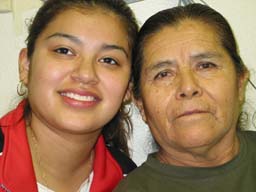
Consuelo and her grandmother

Eternal Things: Awhile ago a former student challenged me to focus more on the eternal. I was not sure how to do this, but my respect for her is such that I’ve kept it in mind, waiting, I suppose, for a sign. I know that we do the work of the Samaritan; and I know there is scriptural basis (in all religions) for such work, but it just seems like what we do. About a month ago we were asked to help care for Mr. S., a man with terminal illness. Mr. S. was a Parkland patient with no insurance or Medicare. The deal we worked out was that the Parkland nurse practitioner would see him several days a week and we would go on Tuesdays and Thursdays so the Parkland NP would have a break.

Mr. S. lived with his son and daughter-in-law, their three children, his wife, and toward the end, his two sisters – all in a two-bedroom apartment in South Dallas. The daughter-in-law did nearly all the care for Mr. S., and the sisters took care of the children, cooking, and so on. What a magnificent job the daughter-in-law did! What a wonderful family.

Last Thursday we were there, changing his dressings and getting him cleaned up. By this point he had gangrene in both feet and pneumonia; and the cardiac insufficiency that brought him to this point was worsening. Clearly he was close to death. As always, when we finished with the physical care, we had a prayer with Mr. S. and his family. Lupe (the Agape promotora) prayed with us and for us and as always, we were touched. Mr. S. died at home that night. I thought about the time we spent with Mr. S., and especially the last day and the last prayer. I think that was an eternal thing. 4/2002

Hands: I helped serve communion at Grace a few days ago. People came up to the front of the church and knelt and I served the wine while the pastor and a Cambodian girl served the bread. All kinds of hands – slender, soft, calloused, children, old – one man had a lot of prison tats and another (Asian) had a cross tattooed on the back of his hand. Later I realized that he was part of the Burmese (Karen tribe) family sponsored by Grace. I talked a little with him after church and learned that he worked with Dr. Cynthia Muang on the Thai-Burma border. Dr. Cynthia is a hero of mine. Small world. 11/2004

Thank you: My friend Chuck was playing poker last week and was dealt a straight flush! He showed up at Bible study with a check for la clinica. Here is my thank you letter to a good man.

Refugee camp where Dr. Cynthia worked

“Thank you very much for your generous donation to the Agape Clinic. I think a lot about what we are trying to do at the clinic and why and whether we are wise in our work and our stewardship. The answers to the questions usually come from our patients. Here is what you are investing in …

Last week a woman came in with a complaint of several months of abdominal pain. She was seen by a nurse practitioner student with translation assistance from a 15 year-old neighborhood girl.

The NP student’s path is not all that different from mine – she is 50 years old and has worked in hospice for many years; and is in the NP program as a means of getting ready for the rest of her life. The neighborhood girl’s path – at least early on – is also not that different from mine. She is in trouble and working out court-ordered community service hours.

They were all in the exam room for a long time. Finally, the NP student came out and told me that the patient had been raped coming across the border some months ago, is having symptoms of pelvic inflammatory disease, and is depressed. She had never told anyone before now and was deeply distressed (meanwhile, the 15 year-old was sitting with the patient). We can treat PID presumptively, but this woman also needs HIV and other testing. So, we helped her get an appointment to a women’s clinic; set up for Lupe, our lay health promoter (salary paid in part by First Presbyterian), to go with her to the appointment; had a pretty intense prayer with her; started her on Paxil and pain medication; arranged for her to see a counselor; and moved on to the next patient.

The point (I think) is that all these strands (volunteers, students, troubled youth, donations, community, prayers, and more) come together in this safe place where mercy is practiced. Every one of the strands is critical. Thank you.” 7/2003

February 2004: It’s been an intense several weeks. It began with a child who had been raped and was dealing with it. Dealing with it! She had two very sad little sisters and was holding and comforting them. I don’t know what to think of that – there is more than one way. The whole thing just very sad.
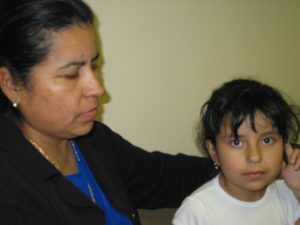
I went to a party where pretty much everyone from Common Grace Ministries was. I was a lot better off when I left than when I came. I’m really grateful to have been there. The thing about most of the people there was that they live lives seriously dedicated to Christ. Toward the end of the evening we sang songs like …

Let the poor man say I am rich in Him
Let the lost man say I am found in Him
And let the river flow
Let the blind man say I can see again
Let the dead man say I am born again
And let the river flow
Let the river flow

Last week the students on outreach saw a family with a history of several generations of violence and gang life. The focus of the visit was a child with uncontrolled asthma. Last year the mother’s boyfriend put a gun to the child’s head and pulled the trigger. The gun didn’t fire but lives already off-track swerved suddenly way out of control. The boyfriend is in jail, awaiting trial, but the child is having serious problems that are intensifying as the trial date nears. The dangers this family faces are short-term (this deal is not like litigation and some of the players are deadly) and long-term (how can this child stay out of gang life or a psychiatric hospital?). So here is what we did:

  • Started the child on preventive asthma care and taught the Mom how to better care for the asthma and allergic rhinitis.
  • Set the child up with same-day psychiatric care – the sort of care the Mother had sought unsuccessfully for months.
  • Worked to ramp up support from other providers.
  • Started the Mom on antidepressant/antianxiety medication and made psychiatric care available to her through our psychiatrist.
  • Started the Grandmother on hypertension medicine.

Then we prayed together, “Father, Thank you for bringing our lives together in this moment …” We’ll follow-up next week.

Later in the day Esmeralda’s Mom came in. Esmeralda was killed in a fire Christmas 2002. I’ve known her Mom from around for 7 or 8 years. I had not seen her since the funeral.
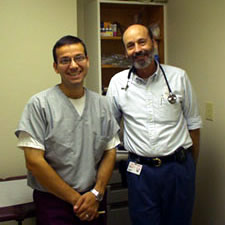
Estevan Garcia and me

A man came in seeking antibiotics, diabetes, and pain medicines. He had been discharged after 2+ weeks in Parkland with deep diabetic ulcers high up in one leg. He had been given a prescription for Levaquin (30 days worth – very expensive) and several other medicines and was unable to buy them. He had been off the Levaquin for several days – a dangerous thing to happen. We were able to (1) take care of the medicine and (2) accompany him on a six hour visit to East Dallas Health Center and help with registration and obtaining needed supplies and medications. This may save his leg. Leslie, our social worker took the lead on this and one can only stand back in awe at what she was able to do.

Last week we saw 102 sick patients; had 28 women receive mammograms (through UTSWMC); screened 40 people for HTN, DM, BMI, asthma, and so on; started treatment on several of them; held a class on women’s health for about 35 women; taught several classes of children; made 9 home visits; taught 8 nursing students, one seminary student, one FNP student, and one faculty member; participated in several miracles; and more. Thank God

Sadly Ridiculous: Rudy is eight years old. He was sent home from school on a Monday because he had tinea capitis (ringworm). His mother brought him to us Friday of that week because she was unable to register at the East Dallas Health Center (EDHC). That’s five days of school missed for ringworm! We treated him with medications supplied through a grant from the Open Ring Class and he is now fine and back in school. 2000
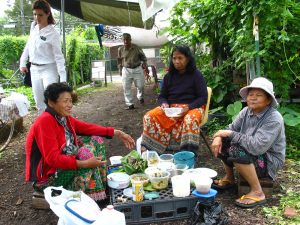
Community garden. Student on outreach

Frightening: Mrs. T. is 52 years old. She has diabetes, hypertension, and problems related to these, e.g., decreased kidney function, peripheral neuropathy, and other problems. Typically, she goes for days to weeks without medications, thus compounding her problems and hastening her first and inevitably early heart attack or stroke. We supplied her with some of her medications, spent a lot of time teaching her about the illness and self-care, and worked to get her registered at EDHC. She is now registered and receiving quality low-cost care. 1999

A Long Time: Mrs. C was a 58-year-old Cambodian woman who had undetected cervical cancer when we found her in door-to-door outreach. She lived in a one-bedroom apartment with her husband and three children: an eleven-year-old son with Down’s, thirteen-year-old daughter who provided most of Mrs. C’s care, and a fifteen-year-old son who was sent to prison midway through the course of care. Her husband was an alcoholic and not involved in her care. One of her neighbors, Pheng, took care of Mrs. C’s children much of the time. This was not a small thing, as Pheng lived in a two-bedroom apartment with her husband and five children.

Mrs C had a terribly difficult life. She grew up poor and in her middle years survived war, torture, forced labor, and became a refugee several times over. When I met her she was an alcoholic and abusive to her children. Mrs. C spent most of her days and nights lying on a small couch in the apartment living room.

Students and faculty were instrumental in the cancer being diagnosed, played a critical role in getting the patient through two courses of treatment (surgery and radiation), and took responsibility for her home care following crises related to very severe complications of disease, treatment, and her own well-hidden alcoholism (septicemia, stroke, seizures, bowel obstruction, malnutrition, and dehydration). For two years, Mrs. C received at least three home visits each week. She agreed to hospice care about two months before dying.

It was clear to all concerned that Mrs. P was spiritually bereft and without hope. Using both Buddhist and Christian translators, we tried counseling and to address hope and other spiritual issues in several different ways. Although she was nominally Buddhist, she refused offers of transportation to the temple. On several occasions she accepted gifts of objects sacred to Buddhists, but after a few days would put them away. Several Christian missionaries visited on a regular basis and although she did not resist these visits, neither did she respond to them. Everything we tried seemed to fail. She did, however, seem to appreciate our efforts to care for her and her family. The only thing that we saw that affected her was when one day a nursing student knelt unbidden beside Mrs. C’s couch and prayed. Although Mrs. C understood little of the prayer, tears began to run down her cheeks as the young woman prayed. Afterward, Mrs. C whispered, “Thank you.”
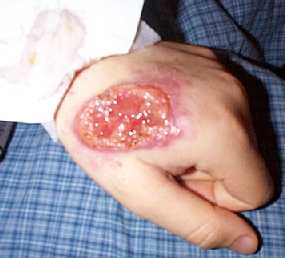
Schistosomiasis lesion

The week before she died I went out of town for a conference. I returned late Sunday. On Monday I left for work early so I could see Mrs. C first. I walked into her apartment and at that moment, she died. Two hours after she died, the only people left in the apartment were her daughter, one of Pheng’s daughters, and a gangster friend, Ranny. Ranny suggested that Mrs. C should have “something pretty” on. So we removed her clothes, bathed her poor wasted body, and dressed her in a pink T-shirt and her best sarong. Approximately 1996-98
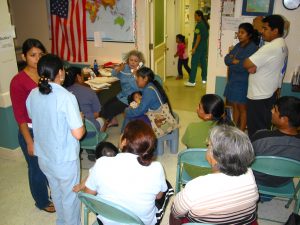
Waiting room. Leslie on phone

Strange People: In the course of outreach, one of the students made several visits to an apartment where a 60-something year old woman lived with a younger man and woman. The younger woman was very seclusive and every time we were there she had blood in her mouth (but no other evidence of trauma), and would not let us close enough to determine what the problem was. In conversations with the older woman we learned that the man (call him Jimmy) was “helping” a 10 year old girl who lived nearby. Over several weeks the story came out that the girl had a bad home life. Her mother lived with two men and was intimate with both. The girl was afraid of one of the men and so spent as much time as she could with Jimmy. She bathed at his apartment and at least once a week she spent the night with Jimmy, sleeping with him on a fold-out couch. According to the older woman, Jimmy and the girl liked to wrestle. Needless to say, when the story came out we took quick action. I remember the student on this case saying in a very serious way, “Mr. Kemp, I think there may be a problem here.” We talked with a detective of my acquaintance and he went after Jimmy and brought Child Protective Services in on the case. I do not know the final outcome, except that the girl was removed from her mother’s home and Jimmy disappeared. Good work, Dear student. 1995

Connections: Jessica came to the clinic with severe onychomycosis. We had enough itraconazole (a very expensive drug) to give her one pulse, which we did. We then contacted a dermatologist who gave us enough to finish the treatment. The last time we saw Jessica, her fingernails were growing out with no sign of infection. This was a good thing, but Jessica is not really the point of the story. Through the process of treatment, we noticed that Jessica’s mother, Maria, seemed distressed. We asked her what was going on and learned that she had no money, her children were going hungry at school, and her husband had been deported. Lupe, our lay health promoter helped get the children signed up for a lunch program and we were able to give the Mom some money. Here is the point of the story: Because someone noticed that something was wrong and Lupe was helpful, one of the neighbors called Lupe in the second week of December, to tell her that the Mom had been killed. The neighbor, Cecelia, took care of the children for eight days until enough money had been donated to send the Mom’s body back to Mexico.

The point for all of us is that we need to keep paying attention to what else is going on around us besides physical illness. Because someone noticed, we were able to participate in sending Maria home. 2000

A Hard Spring: In the spring of 2000 we (Baylor Community Care) lost significant medical services, had to move the clinic twice, were burgled, and an important working relationship came to an end. In our most difficult times in late spring and early summer, we were down to seeing 10-12 patients in one clinic session/week. Though it was a painful time, what stands out the most to me about this time is the people who stayed with the work: Estevan Garcia, Sharon Lehmann, Leslie Kemp, Alison White, Martin Hironaga, Debbie Schwartz, Lupe Springer, Martha Sanford, Marilyn Hightower, Kathryn Marshall, and Edwin Read. What a team! We are now part of the Agape Clinic, our situation is vastly improved, and the team remains largely intact.
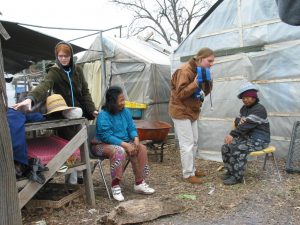
Outreach in the community garden

Pentecostal: I was in an exam room with a patient and a student. The patient was a Mexican woman who worked in a chicken processing plant. Her job was hard and entailed repetitive pulling and twisting (of what, I hate to think). As a result, she had a repetitive motion injury. She was treated with an NSAID and encouraged to talk with her supervisor about changing her task at work. The patient had some personal issues as well.

The student was a Pentecostal. I realized that while our medicine would be helpful to the patient, what would ultimately be most helpful would be the Spirit-filled presence and prayers of a person like the student. I feel something very real and fundamental about the Pentecostals who work with us – and there seems to be more of them as time passes. What a glorious time this is – when Presbyterians, Pentecostals, Catholics, Methodists, Baptists, and others can work together for the Glory of God – somewhere between heaven and earth.

Tattoo: During a clinic session at Midpark Place (an early clinic site in the Kurdish community), I fell into conversation with an elderly man who had brought a Russian Jew to the clinic to pick up medications. I noted the elderly man had a faded series of numbers tattooed on the inside of his arm, horrifying proof he had been in a nazi concentration camp. In that same room at that same time there were Baylor students (mostly Baptist), Catholic volunteers, Kurds (mostly Muslim), an Armenian family (history shows that Kurds participated in the attempts to exterminate the Christian Armenians 1894-1915), and a Buddhist caseworker. Moments like this help me remember the beauty and power of this work. 1997

Reach Clinic: Awhile back a woman brought a 22 month-old girl in to our clinic. The child had two problems: (1) a “rash” that turned out to be genital warts and (2) a prescription for a medication for the warts. The medication cost $140+ and the woman could not afford it. She had been given the Rx at a clinic (the Reach Clinic) that treats children and infants who have been sexually abused. Dr. Garcia called the clinic and was told that the prescription can be filled there and an appointment was made for the woman to bring the child in next week. We followed-up and discovered that the woman did not keep the appointment. After several more contacts back and forth, the child got back to the Reach Clinic and received her medication. Not everything is at it seems initially and sometimes people need a lot of encouragement. 2000

Home Visit (from a student’s clinical log): Thursday, my partner, April and I went to visit a patient with diabetes, lupus, and hypertension. She was noncompliant with her medications she was supposed to be taking; and was taking at least one medica
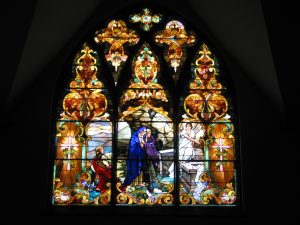
Window at Grace Church where clinic was

tion (hydrocodone) that was intended for someone else. She said she had been taking the hydrocodone along with her medications when she remembered and she never looked at the name on the bottle to see if it was hers. There were 12 out 24 pills left in the bottle. She said after she took the medication she felt very tired. She told me about something that happened last week that I found very interesting. An Angel appeared to her when she was sick and said, “Come on. It is time for you to go you are very sick”, and Ramona (the sick lady) said, “No I am not ready to go.” Still in Ramona’s dreams she can see the Angel’s beautiful eyes and she feels that she is having an out of the body experience and the Angel is carrying her. I asked Ramona if she had ever asked Jesus Christ to be her personal Savior and to forgive her of her sins. She started crying and said, “Yes I have.” I then asked her if she and her friend would like to pray. They both said yes and we all joined hands and I prayed for them. I referred Ramona’s friend to Parkland, for pain and discharge from her left breast. She called while I was there and made an appointment for that day. 1999?

Split Shift: I was seeing a ~50 year old woman with diabetes and an inf
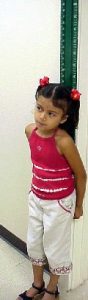
“Not too tall”

ected toe (Those go together – horribly in some cases.). Somewhere during the exam I realized she worked at a major hospital. I was irritated. We are a small overloaded mission clinic serving people who have nowhere else to turn; and of course this woman had insurance. I told her we would take care of her infected toe and tide her over with oral hypoglycemics. But she should use her insurance and see a private doctor or go to the hospital clinic. While I was getting her medications, she told Lupe (our promotora) that she worked for a temp service and did not have insurance. Lupe told me when I came back into the exam room. I felt small – so much for my cheap irritation. I asked the woman to come back in the following week first thing in the morning, fasting, so we could get a better picture of her blood glucose. She then told us she worked a split shift – 6-10a and 4-8p. Have you ever worked a split shift? It is really hard – you’re never really off. So this is the life our patients lead – very, very hard; out of meds half the time; putting up with irritated clinic people. When she returned three weeks later (no diabetes meds for the last two weeks) she told Lupe she actually did have insurance, but did not know how to use it. This also is the life many lead – paying (top dollar, I might add) for something they cannot use. She is scheduled to return next week for a blood glucose check and help from our social worker to be able to use her insurance. 2001

On Columbia … There are women walking children to school

You are the salt of the earth … you are the light of the world … Matthew 5

Days in the life – Berkeley, 2025

Looking out bedroom door from bed. Fog bank in the distance.

In the end we’re just carrying the water, tending the fire, planting and harvesting…

I was prompted to make this post by contact with a distant relative and a question from a friend near Point Reyes. My friend had asked, “What do you do?” (as I live my life). (Click photos to make big; then back arrow.)

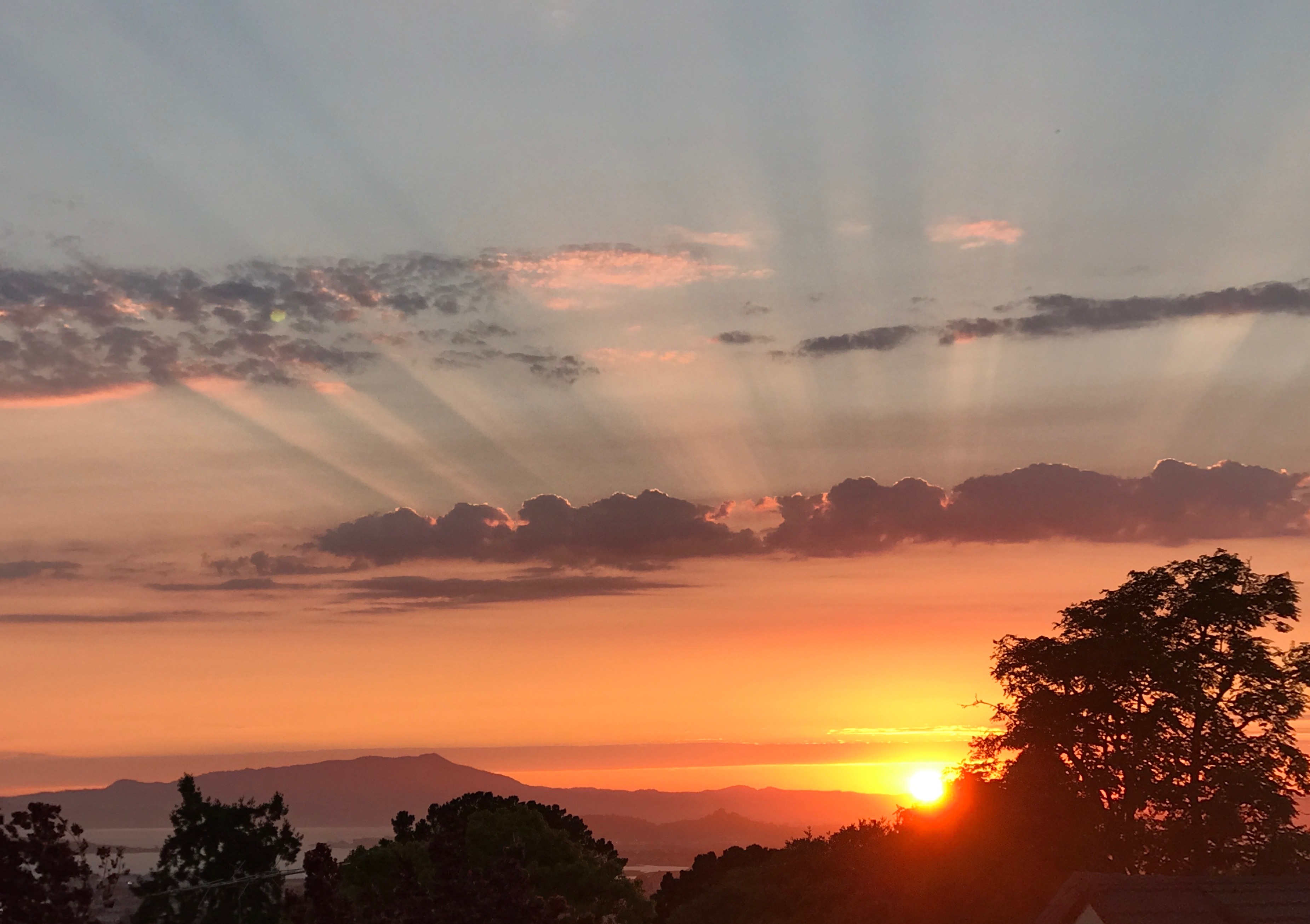
Saturday. Got up at 6:30, fixed coffee and a little fruit bowl for Jean to have before her medications, and brought these to her. We drank coffee together, watched the sky and the distance from bed, and talked. From Jean’s place in bed she can see SF Bay and Golden Gate Bridge; I can see the Bay, Marin headlands, and Mt. Tamalpais. We call what we see in the mornings “the today show.”

A little after 8:00 Jean got up and bathed and I fixed breakfast. This morning it was the usual: fruit bowl with yogurt and granola for Jean and toast and almond butter for me. We’re close to California’s Central Valley and Oregon’s orchards, so the fruit here is exemplary. This morning we had a mix of pear, apple, orange, strawberries, blueberries, banana, and grapes. When I was in Dallas I baked all our bread for quite a few years. Now here, there are several great bakeries, selling levain, spelt, and other crusty, coarse, tasty loaves that are even better than what I baked. Today’s bread is levain from the Cheeseboard Collective.

We ate together in the living room, and talked, again with the view. I showered and Jean did Pilates. I tended the plants on the deck (again, the view) and Jean made some phone calls. The way we live with the Bay, the City (SF), Marin, and the sky and clouds and sun and fog and garden all right here means that outside and inside are not separate. When it’s just a little warmer we’ll sleep with the French doors in the bedroom open to the outside – “one door nights” and “two door nights.”

Jean is working in the kitchen, getting a to-go lunch together for a friend who is unwell. Someone is coming over in a few minutes to help with the irrigation system. He came – thank you! We planned on a walk at the nearby middle school track, but didn’t do it. With my iPhone I’m in my third year of counting steps. In year two I increased steps by about a quarter mile and in year three, by another quarter mile.

Thyme in flower

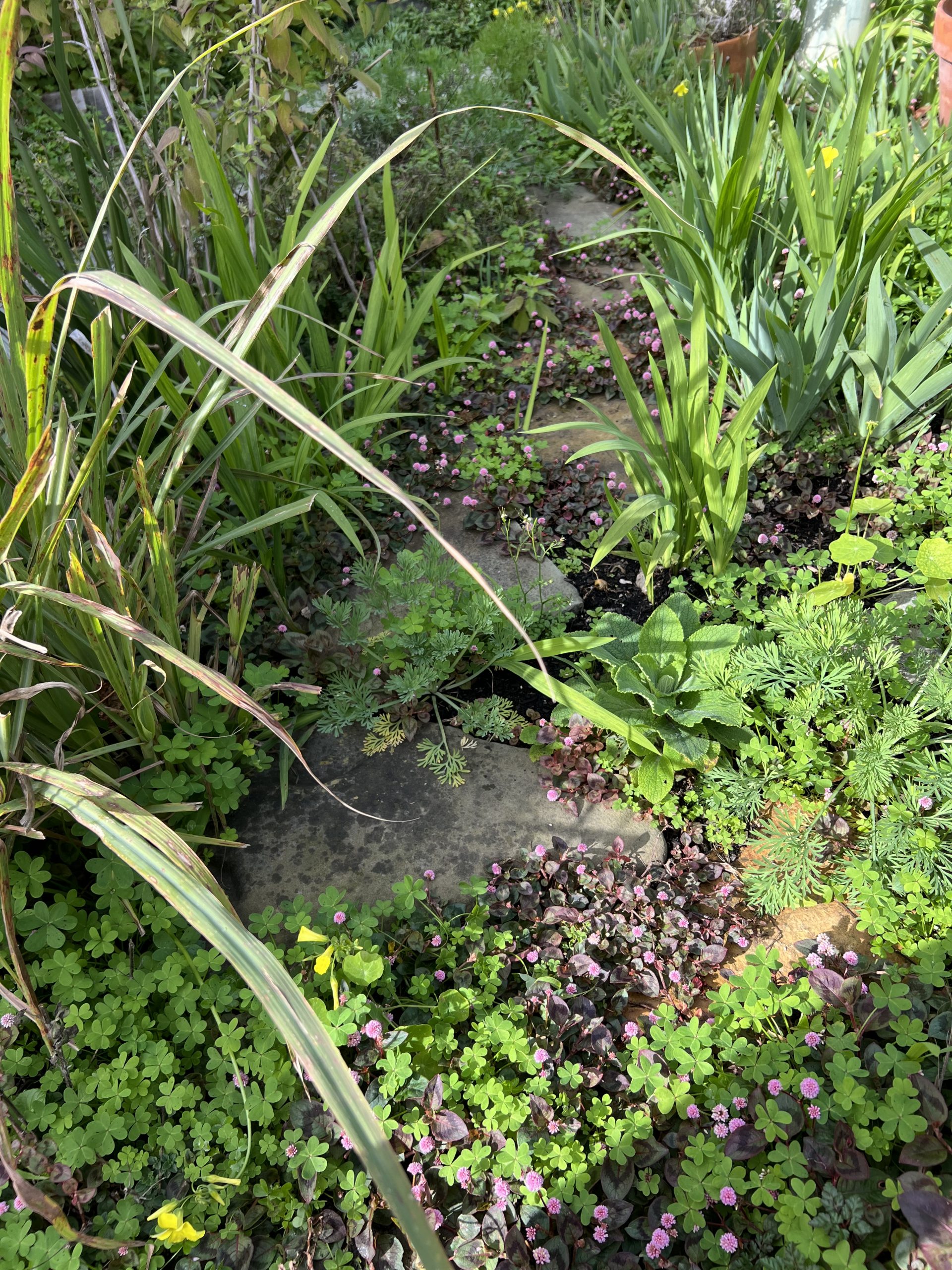
Watered front garden for an hour. Plants in bloom right now are thyme, nasturtium, sweet alyssum, two kinds of alstroemeria, two kinds of California poppy, calla lily, three kinds of iris – including from Jean’s father, butterfly sage, borage, tansy, agapanthus, columbine, lavender, rose geranium, yellow tagetes, coreopsis, impatiens aloe vera, day lilies, and the lime tree.

Back downstairs garden

Jean has had a contractor working on the downstairs bathroom. To start the job she had to move quite a bit of fabric and artwork out because the bathroom was basically used as a large storage area with a toilet and sink. There were many remnants of dyed and felted wool, which Jean sorted and bundled according to colors, and then stacked in the downstairs bedroom. Somehow, to me anyway, the stack of bundles became an art installation. Some of the textiles went to art schools or artists collectives. It’s like the extras from a lifetime of textile art.

At work in her studio

Right now, she’s in her studio, working on the third in a series of self-portraits related to health challenges over the past few years. This one is heart-related. Others include the spine/pain and the neurological challenges of dysautonomia. I’m unsure about how long she’s been working on this series – a month, at least.

The house is kind a kind of unassuming one-story bungalow on the outside (with an extravagant garden). Inside it is like in the song, “hangings rich of many strange designs” very beautiful. The hidden away downstairs down winding stairs has a small room for Jean’s archives, a laundry room, a bedroom, a storage room, a bathroom, and a large bright, high-ceiling studio opening out on a deck and more garden. The deck reminds me of a Thai or Cambodian artisan area with its bamboo poles for hanging fabric.

Being as old as we are means (among other things) spending a lot of time taking care of our bodies. We’re like athletes, always working out, dealing with injuries and infirmities, eating special diets, trying to stay in shape…

Tonight we picked up our friend, Susan and went to dinner at Kiku Japanese restaurant.

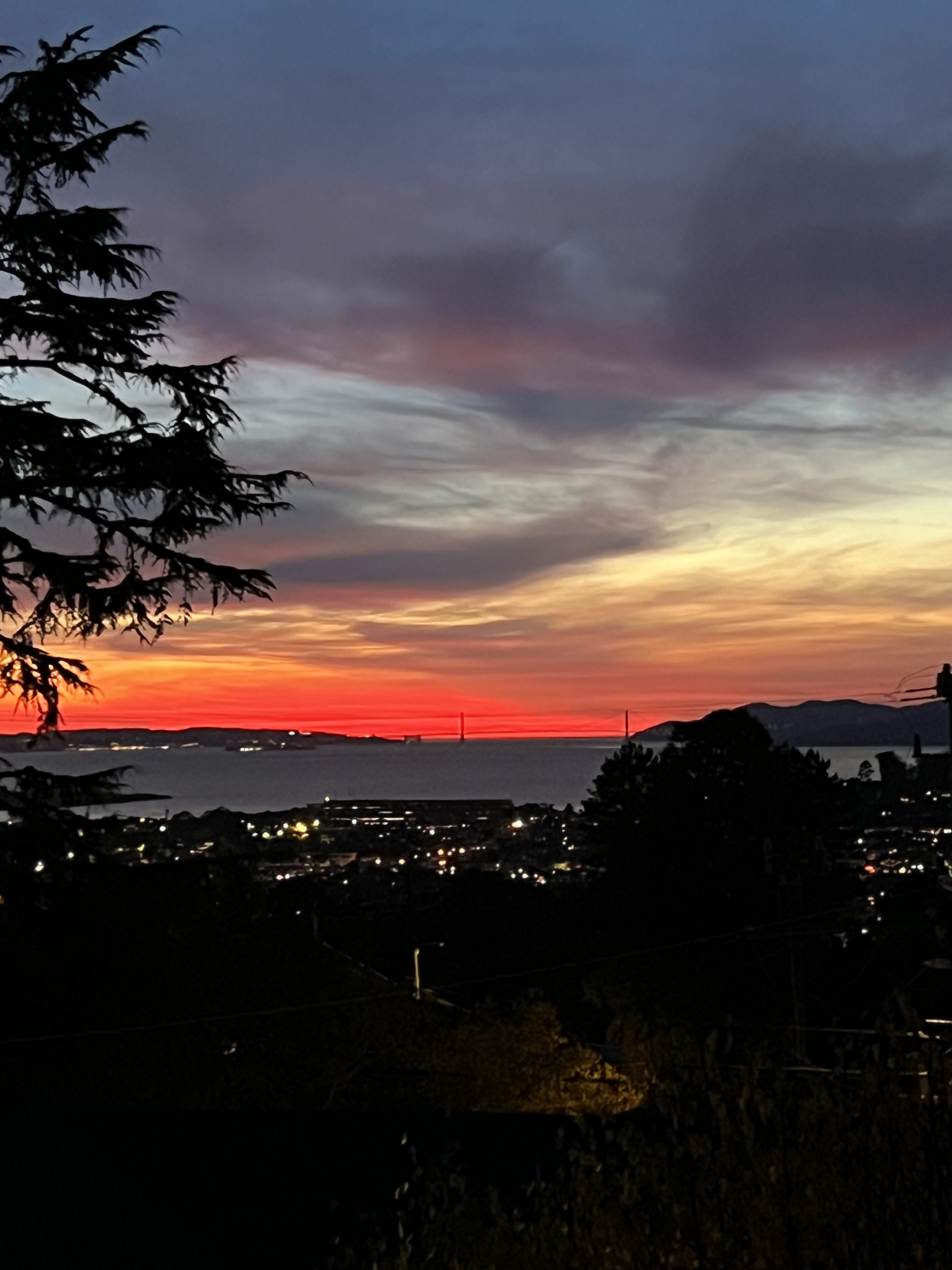
Sunset from deck

Jean and Susan split some sushi and I had yakisoba noodles. Not unlike pad Thai.

I always look forward to going to bed with Jean in the evening. The goal is to get there before 9 pm and we usually make it. We take turns deciding on “the entertainment” (computer TV) which basically lasts for an hour. Right now it’s kind of rotating among White Lotus, the Americans, This is Us, and some mash-up of Seinfeld, Colbert, Midnight Diner, and Mark Wiens. For us, TV is one of the outcomes of the pandemic, i.e., something that changed as a result of the pandemic and lockdown. Other changes include having as much mayonnaise and butter as I want, because, you know, we could all die at any time. I’m out there on the edge again, man.

The track at King Middle School

Sunday. Up at 6:15, fix coffee, meds together, small fruit bowl for Jean so meds won’t be on empty stomach (I always put it in the plastic bowl I got on a Cathay-Pacific flight about 25 years ago). Lying in bed watching the sky and sea and land. We did a short “grateful” – in which we set an alarm for five minutes and lie there quietly thinking of things for which we are grateful.

Breakfast was poached egg and toast. My secrets to poached eggs is very light oil to skillet, cold water brought to boil, slip egg sloooowly into the water so that it cooks a little as it goes in, cover to skillet. When they’re about done, use spatula to loosen eggs. Turn over if wanted (I sometimes make a mess doing this.) and poach to desired doneness. Serve on toasted levain or spelt. Trader Joe fresh “medium” salsa from cold case. In this and all other matters, no salt cooking or serving. Tastes great!

Walked at Martin Luther King Middle School track. There were people of every age – old and young – and every physical ability, walkers, runners, fast and slow, and soccer teams playing. When the soccer game is over there will be a volleyball game on the field.

Lunch together. I had a sandwich made from leftover bun bo xao beef and Jean had leftover sushi.

Front garden

Nap.

I worked on the sprinkler system in the garden. As always I got soaked but finally got things set up for the dry season. Jean worked on her “Kona’s rug,” which was just cleaned. Kona was her well-loved black Labrador. We talk about getting a dog, but it doesn’t seem practical at our age. Still…

Obsolete: 25 years ago I realized that one of the major disconnects between the healthcare system and refugees and immigrants was that patients from foreign lands were worked up like patients from the US (except of course that there were more barriers for foreigners). Despite a high probability of parasites among patients from developing nations, parasitic infection was a distant differential so there was always months of delay before getting to the cause of a problem. And, at least in primary care, emergency care, and elsewhere there was a general lack of awareness of infectious and tropical diseases. Thus was the book Infectious and Tropical Diseases conceived.

I developed the differential diagnosis sections of the book and then two colleagues and I worked on diseases sections for over a year and in 2006 it was published by Elsevier Science. A unique characteristic of the book was that diseases, symptoms, and geography were extensively cross-referenced, so that readers could quickly zero in on symptoms/diseases endemic to particular locales. It was a good book and we got good reports from practitioners working in refugee and international health. Yesterday I had the jarring realization that the innovative cross-referencing concept has been made obsolete by AI. Of course, the book has been out-of-date since a few years after publication, but the concept!

Here is what Chat GPT said in response to the query “50-year old Kurdish male from Iraq with abdominal pain 10 years duration:” “The diagnostic approach should consider both common global causes and region-specific infectious, environmental, and psychosocial factors, particularly given the Kurdish population’s potential exposure to trauma, limited healthcare access, and endemic infections.” Hydatid disease, strongyloides, and schistosomiasis were noted as risks by ChatGPT.

If this all seems irrelevant, recall the 2014 Ebola case undetected for several days at a major Dallas hospital. Now that was scary, at least among ER staff, refugee health workers, and people living near the sick man! Three cheers to AI!

I lost track of keeping track of everything. Getting a little random.

From my last trip to the bathroom about 0500 I saw through the deck door the yellow/orange moon hanging low over the Bay. It was beautiful but not enough to wake Jean.

Leaving Point Reyes

I’m thinking there’s a certain sameness to life these days. There is love, there is surpassing beauty in life, lots of gratitude, some seriously good times and seriously hard times. I feel like I understand life better. I think of the challenges of the day. I think often about David and Leslie and Jean. I think about traveling, war, working with refugees, the clinic, friends, people who have helped me (and people who have hindered me, people I’ve worked with, writing, teaching, hospice, life, the end of life, the house in Dallas. I’m happy I worked so hard and accomplished what I accomplished. We do social things 2-4 x week like dinner with friends, lunches out, museum trips (Jean does the museums; me, not so much.

Another day: Tracking in detail.

Coffee in bed – Jean’s mug is from a gallery in Red Lodge when we went to see Courtney in Montana and my mug I bought from a Chinese dollar store during David’s and my first trip to San Francisco. Fruit snack in a Cathay Pacific mini-bowl from long ago.

Sunset

Talking

Breakfast – JC smoked salmon and cream cheese on spelt, fruit salad (orange, apple, grapes, strawberries, blueberries, banana); CK fruit salad with yogurt and toast (levain and spelt) with almond butter from Berkeley Bowl – all served on plates from Jean’s Mom and bowls made by a neighborhood potter, James Newton, and I’m eating with my spoon from Cathay Pacific. 

We go to a bayside art and nature place (“The Bulb”), but the wind off the Bay was so strong and cold we left and went to our usual weekend walking place, the MLK Middle School track. On the way stopped at Monterey Market for the first fresh corn of the year and a big bunch of chard. On to the track.

The other night I made stuffed small new potatoes like we had at the Amet Haveli hotel in Udaipur (this time I stuffed with cheese, chives, ham, z’atar). Baked, split, scooped out, mix cream cheese, lots of chives, tiny pieces of a small slice ham, potato and stuff the little potatoes. Top with cheese – used provolone. Re-baked ~10 minutes.

Morning, Mount Tam in distance

This week Jean has been to a women’s gathering in Sonoma, I’ve had lunch with Peter N-R, and we’ve had dinner with Nancy and Peter and with Susan.

Jean finished an art piece: The Heart. See above re series. 

Challenges faced: Pain, feeling tired, medication side effects, the complexities of navigating the health care system even when things are going pretty well, rising prices, the moral decline/the corruptionof America, the gutting of values of decency, honor, honesty, and so on.

Back to the photo of the morning sky:

Morning has broken, like the first morning.
Blackbird has spoken, like the first bird.
Praise for the singing, praise for the morning.

Praise for them springing fresh from the Word

“Baby, ain’t it all worthwhile.”

Not that far from Desolation Row

Shotgun house. He lived with a prostitute in the front room of a shotgun house off Woodall-Rogers Freeway near downtown. (A shotgun house is a narrow one-story shack that could theoretically be cleared with one shotgun blast through the front door.) In the course of being treated for cancer he suffered a radiation injury that caused triplegia, paralysis of both legs and one arm. The other arm wasn’t much good. When he came home from the hospital the woman put him on a bedpan and left him there for a day or two. When I got there the skin over his coccyx was intact, but was kind of purplish. Within a few days the skin began to change color and underlying tissue began to break down and soon there was a large (~10 inches in diameter) and growing decubitus ulcer (down to the bone). I would clean the ulcer and we would talk. He was bitter about what had happened with the cancer treatment as I recall, but he had been a hard life before the illness and injury and he was mostly accepting or resigned, or so it seemed to me.

From time to time when I was there, the woman would bring a trick through his room on the way to her room. She was a heavy drinker and often smelled of liquor. She was sweet-natured and pretty in her own way, and I liked her. Teaching her to care for him was a real challenge.

The ulcer got bigger and bigger and after a few months he died. A couple of years later I saw the woman on a corner in another part of town and stopped to talk with her. She was drunk and smelled pretty strong. She asked me if I wanted to have sex with her, but I said no thank you and gave her some money. That was the last time I saw her.

———————-

Eggnog. He lived alone in the Cedar Springs projects. He had head and neck cancer (squamous cell carcinoma) with many tumors in the nodes of his neck and down into his chest. He had a mattress on his living room floor and he got around by crawling from one room to another. He had difficulty swallowing and was unable to take any solid food. He liked eggnog, which was fine around Christmas, but problematic after the holidays. I went to quite a few stores to find the last of the eggnog. After that he had to make do with protein drinks, which at the time were not as readily available as they are now.

———————

Burned. There had been a gas shortage and two brothers decided to hoard cans of gas to sell at a big profit. He lit a cigarette and the gas exploded, burning him over most of his body. After months in the Parkland burn unit he was finally discharged. He didn’t do his exercises and ended up with his arms frozen in a flexed position. He had no fingers, no nose, no ears – every part of his body that protruded had been burned off. He was pretty much all scar tissue.

He lived alone the same Cedar Springs projects as the man with head and neck cancer. His wife would come over sometimes and would throw his meals-on-wheels food on the floor. When he walked he would stagger; when he went out the children in the projects would throw things at him and call him names.

I don’t know what happened to him.

———————

A prayer. The promotora de salud (lay health promoter) and I went to see a woman with far-advanced cancer. She was in a coma and had gangrene. She lived in one of those barren outlying Oak Cliff pink brick apartment buildings where gangs pretty much ruled. The main thing we were there for was for the promotora to pray for the patient. We were there at her bedside – the patient and her daughter, the promotora, and me, all holding hands. Everything was in Spanish, except when the promotora leaned over to me and whispered, “I think her toe just fell off.” It had.

——————–

Dressing change. There was a homeless man who hung around on Bryan Street. One of his legs had an old injury that was chronically infected. The lower part of the leg was markedly enlarged and hard and suppurating. He refused to go to Parkland, the county hospital.

At the time, my students and I were operating out of the “police storefront” at the corner of Bryan and Annex. The police had banned the homeless man from coming inside after he had used their toilet to have a huge and hugely malodorous bowel movement.

He would come to the storefront every week and one of the students or I would change the dressing on that leg. It was literally a weekly dressing change that involved cutting away the old exudate and blood-soaked dressing and putting on a new dressing. He would sit on the bench of the picnic table or a retaining wall outside the storefront for someone to change the dressing. I thought the maggots might be what was keeping him alive. I was surprised at how fast maggots can move.

———————-

Staying home. Ms. Brown lived in a sparse one-bedroom apartment with Mr. Escalera. She had rheumatoid arthritis, was home-bound, and in fact, mostly bed-bound. I recall that the first time the students and I turned her over a multitude of cockroaches scattered out from under her back. She had several health problems, especially the pain from RA. She was a nice woman with a good spirit and was very strong mentally. While the students were in the bedroom with Ms. Brown, Mr. Escalera and I would sit at their little kitchen table, talking and him smoking. I marveled at how he was able to keep her at home – get her to the bathroom, take care of food, clean the apartment, everything. After a few years there were changes made in where and how the students and I were operating, and we quit seeing Ms. Brown. Ultimately, she developed cancer. She never told anyone and she just wasted away in her bed. I saw her a few times during the course of the illness, but she refused any assistance other than the home visits. My friend, Alison, the missionary also became involved. We all did exactly what Ms. Brown wanted, which was to help her never leave her home in her little apartment.

——————-

The students. When I refer to “the students” I mean the Baylor students who were in my community health clinical groups. Each semester I had two groups of eight students. Very few of them had ever been exposed to the levels of poverty and unmet health needs they were immersed in through  this work in refugee communities. They worked with me as partners in learning about community health through providing community health services. The students operated in two-person teams in designated neighborhoods. They learned about community health through finding people with problems and alongside the patients, solving the problems – and never just referring people to somewhere else.

As much as possible, they went through “the healthcare system” with patients; students learning, for example what the Parkland OB clinics are like: a waiting room with 50-100 plastic chairs; waiting room floor sticky with spilled soft drinks and baby formula, Cheetos, whatever; maybe 16 exam rooms around the waiting room (my memory is clouded re some details); someone shouting/mispronouncing patient names (you better not miss hearing your name called); and once in the exam room, being seen by a different person on every appointment (expect another vaginal exam); being sent out from exam not having any idea what next.

Eventually, as we developed the Agape Clinic (a-ga-pe) as a community resource, the students spent more and more time in the clinic, though we never abandoned the home visits and community outreach. In the clinic students had responsibilities that rotated week to week – triage, manager, exam rooms (5), pharmacy. As was the case with the outreach/home visits/district health model, students had significant responsibility and autonomy. Oh, what a job they did!

Here is a description of the work, in the streets https://ckjournal.com/in-the-streets and more on the Agape Clinic https://ckjournal.com/agape-clinic-recollections

——————–

On San Jacinto. In one of the apartment buildings in the 4000 block of San Jacinto there was a Vietnamese woman who had some unspecified mental health problems that were manifested in part by her yelling and sometimes fighting with neighbors. She had a dream one night that her apartment was filled with Buddhist and Catholic religious statues. She began putting religious statues in her apartment according to the dream and as the apartment was filled, she quit the yelling and fighting. She became something like a fortune-teller. Although she didn’t have any outstanding health needs, I would stop in at her apartment when I could. She would fix coffee for the two of us and we would sit at her kitchen table and talk.

In the same building there was an old Vietnamese couple living with a teenage girl named Thuy who was deaf and mute. The man had a stroke. He survived but was completely incapacitated. By some miracle he ended up in a nursing home just a mile or so from the apartment. His wife would walk to the facility every day to bathe and feed him. When he died the funeral service was held in a South Dallas funeral home. I remember his wife and Thuy ended up on their knees on the floor in front of the coffin, wailing and falling out. After school Thuy went to work at Fiesta groceries and did well, as far as I could tell.

In the same building there was a Cambodian woman who was married to a White man who was somehow involved in drugs. One day Leslie called me and said I should come to her office right away. When I got there the Cambodian woman was sitting under the conference table in Leslie’s office. She had appalling stitched lacerations on her body. Two men had come into the apartment and stabbed her husband to death, raped her, and slashed her. She had been taken to the ER and when they were done with her, a missionary named Chuck brought her to Leslie’s office. I went to her apartment to let the police know where she was. I remember how polite the homicide detective was when he questioned me (everyone is a suspect in their world). I remember that there was an amazing amount of blood on the bed, floor, walls, and even the ceiling.

In the same building there was a Lao family – three generations in a small apartment. They had pigeon cages covering several windows with the pigeons free to come and go to the outside world and a sliding door on the inside. At night whenever someone wanted they could open the sliding door and reach into the cage – pigeon for dinner. Eggs, too. The same family had a big aquarium filled with popcorn and big grubs eating the popcorn – grubs for dinner.

Across the street a widow with two sons lived in an upstairs apartment. One day the brothers were arguing over a bowl of rice. One of them stabbed the other, who fell out the window and died.

——————

Get-away. The students ran across a 16 year-old girl who was living with a man in his mother’s second-story apartment on Virginia Street. The girl wanted to leave, but the boyfriend and his mother wouldn’t let her. The students talked with the police, but they had already been in contact with the girl and she was uncooperative. Now, she said, she had to get out. The police wouldn’t help, so the students and I came up with a plan for the students to make a home visit and distract the mother. While that was happening in the living room, the girl was throwing her possessions (in three black plastic trash sacks) out the window to me waiting down below in my blue Toyota pick-up in the driveway between two apartment buildings. The girl then walked out of the room she shared with her boyfriend and followed by the students, walked out of the apartment to the alley where I was waiting. Away we all went to the police office. One of the police officers bought the girl a bus ticket to LA where she had family in Compton. She was back with the boyfriend in about a month.

——————

A man with a gun. In one of the apartments on Annex Street a Chinese woman from Vietnam ran a little store out of her apartment. People could buy soft drinks, snacks, and the like. One of her daughters had a large nevus (mole) on her face. The mother told her daughter the reason she had it was because in a previous life she had wasted her husband’s money. A dermatologist at Children’s Medical Center Girl decided it was appropriate to remove it surgically.

On the day of surgery I went to the apartment to drive the girl and her mother to CMC. The girl got in the truck first and said, “My mother says there’s a man with a gun in our building.” I said, “Tell her to get in the truck now.” The girl said, “There’s the man.” Sure enough a man was walking towards us and he had a pistol (like a .357) stuck in his jeans. I reached across the girl and pulled her mother into the truck and was backing up across chunks of concrete and curbs and whatever. Meanwhile, a man in a white car picked up the man with the gun. I drove around the block to the police storefront and told them about the man and several of them took off toward the apartment. We went on to CMC, where preoperatively they gave the girl a fentanyl sucker which pretty quickly got her all smiley and goofy. The surgery went well. The guy with the gun got away but an hour or so later got into a gunfight with the police on Central Expressway.

Another week in Berkeley, 2024

From the bedroom – the Today Show!

I was listening to the Van Morrison song, And the Healing Has Begun. The song resonates powerfully with Jean and me, in part because it was in our life together that the healing from our spouses’ deaths really began – and of course, thanks to David and John and Jeff and Janet and Susan and Sherry and others for keeping us pretty well until Jean and I met. Among the lines in that song that resonate most powerfully are:

We’re gonna stay out all night long
We’re gonna dance to the rock & roll
And then we’re gonna go out and roam across the field

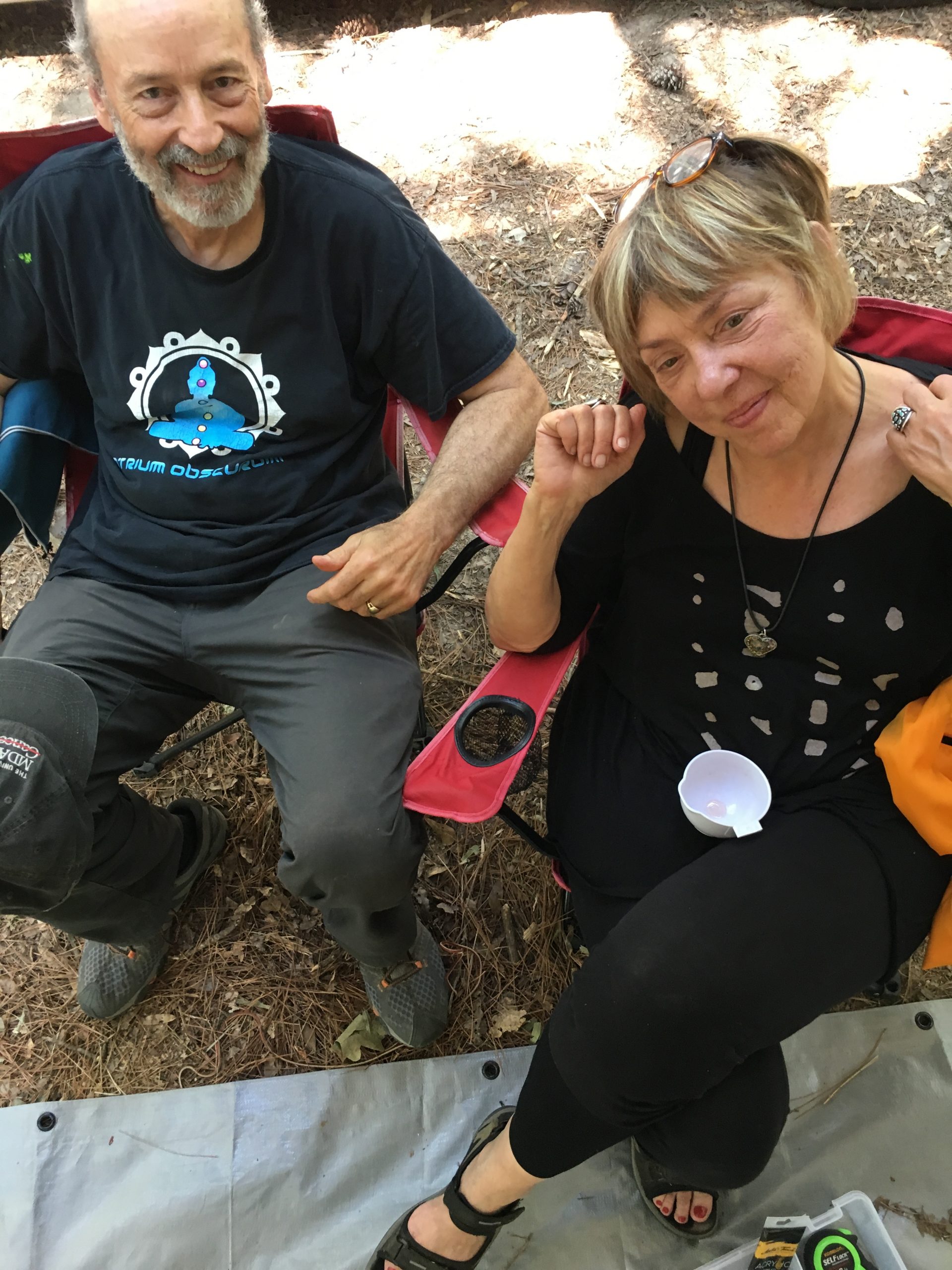
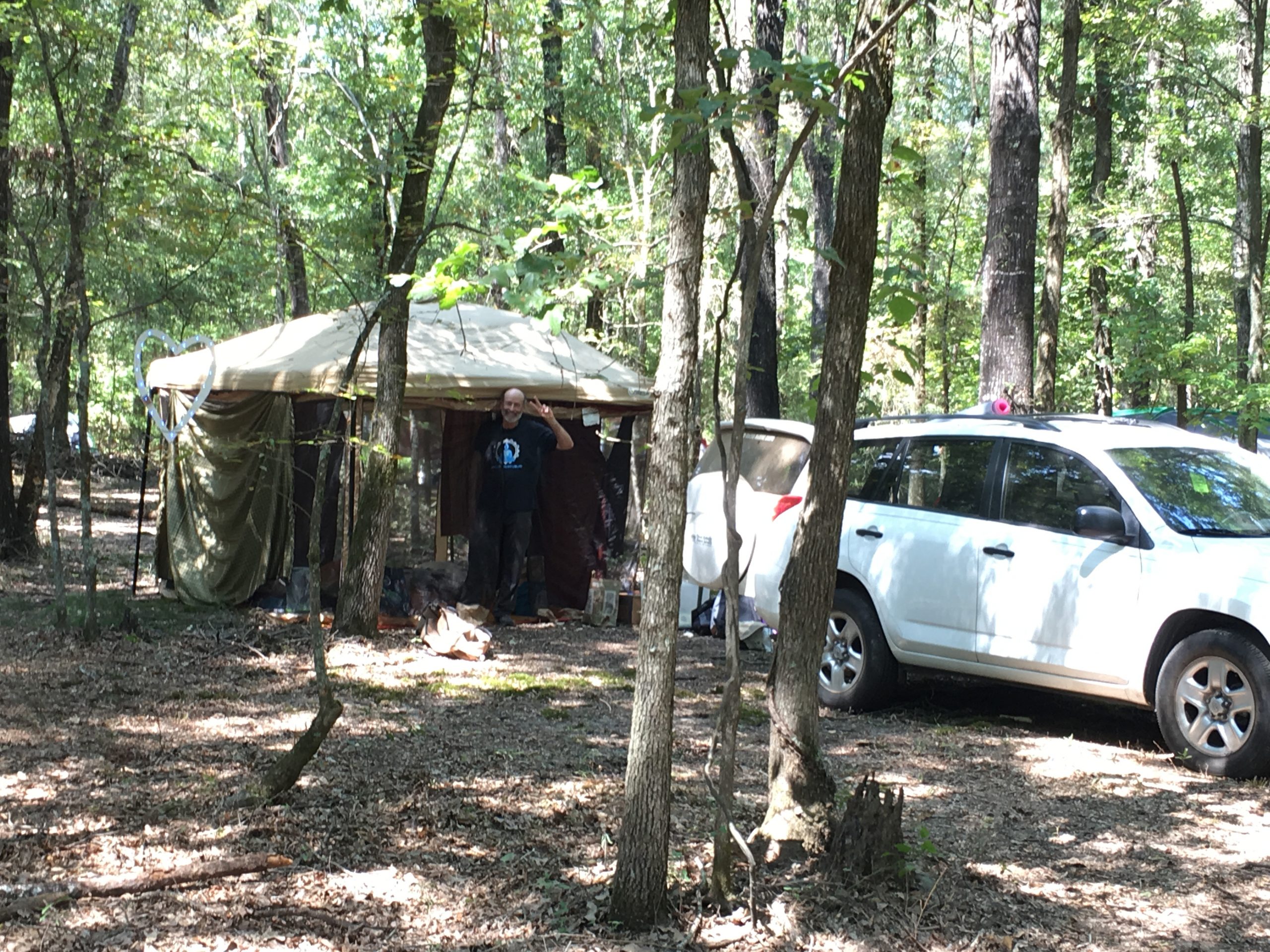
The last time we stayed out all night long (other than at a hospital, LOL) was in 2018 when Jean and I were at a psytrance event thrown by the collective (Atrium Obscurum) that I’d been part of previously. It was a three-day, two-night party, but we were only there from Friday afternoon – Saturday morning. We worked the gate Friday evening (my last work with Atrium Obscurum) and hung with friends and then Ro’s Rage Against the Machine cover band played and then the opening ceremony and then the dancing began. We were awake through the night in our forest campsite, sharing words of love, kissing, making love while the music pulsed and people laughed and danced in the forest and over on the earth dance floor under the trees all through the night. In the morning we went to the dance floor, then to a yoga meeting with Kristina, and then we went swimming at the nearby spring-fed Lake Daingerfield. It was all magical…

At psytrance party

We’re gonna stay out all night long
We’re gonna dance to the rock & roll
And then we’re gonna go out and roam across the field
The music was psytrance instead of rock and roll and we swam in the cold spring waters instead of running across the field, but it’s all the same.

——————-

Searching through my blog for something related to Van singing And the Healing Has Begun I came across one loving post after another. Really a lot. Oh, the magic of our life together – where the healing really did begin! I’m awed by our reality then and now. I am so grateful to you, Jean. These days we sit naked in the warm waters of our hot tub with the moon shining, an owl hooting off to the north, and The City all lit up in the distance. What a time we’re having.

I found posts from 2017 and 2020 with the same title, Another Week in Berkeley. So here comes yet another week in Berkeley from now:

Tuesday, 2/13

Hot tub at sunset

We’re still chugging water to start the day, snack, meds, then our very own “Today Show” – what we see from our cosy, warm bed looking through the bedroom doors across San Francisco Bay, the Marin Headlands, Golden Gate Bridge, sky, clouds… talking, coffee, massage, .

We’re still having fruit salad most days for breakfast: today it was pear, strawberries, blueberries, a little apple for the crunch, yogurt, maple syrup, toast, almond butter. After breakfast we had a soak in the hot tub (more on that in a moment).

Jean went to the dentist and I went to a Pilates session with Sandra. A few months ago Peter N-R gave me a session with her (Thanks, Peter!) and I’ve been going back weekly since then, except when I had covid.

We exchanged Valentine’s Day cards (more words of love). Jean and I fixed dinner: scallops in a simple, deep sauce with pasta and brocolinni.

Wednesday 2/14

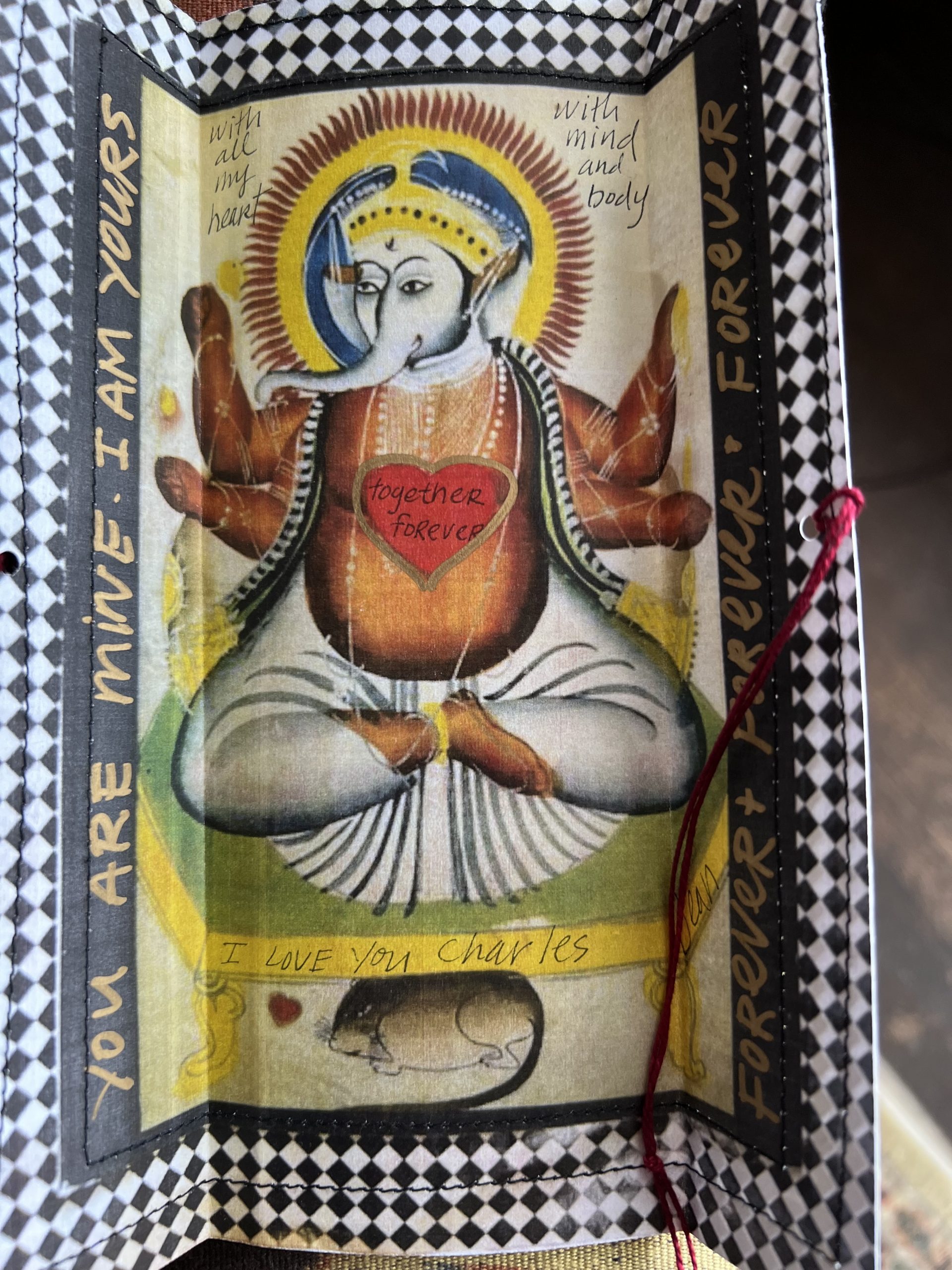
Jean made this Valentine’s Day card for me

Another day in Paradise, starting in the bed with meds, snack, mate, and the Today Show. First thing in the morning, hummingbirds fly straight up high in the air before they zip off to somewhere. There is a willow-related tree growing below our house and the top of the tree is eye-level for us. Hummingbirds like to perch on the very tip of the tip-top branches like little kings of their demesne.

Breakfast this morning was a “giant cookie”: oatmeal with strawberries and blueberries, Jean’s with butter and mine with almond butter, maple syrup, milk. As always, we ate together in the living room.

Afterward I drove to Solano Avenue, parked, and walked way down the street, then back up the other side, then to Peet’s, and then Andronico’s for strawberries, milk, and King Arthur flour.

After lunch we took a nap, then Jean went to Freida’s for haircut touch-up.

Exercise

I walked up to the Kensington market for ground beef and Jean fixed meat loaf, mashed potatoes, and broccolini for dinner, accompanied by Levain from Acme Bakery.

Since the pandemic began we’ve been watching television for an hour every night. Tonight we watched Sol Life on YouTube (the day-to-day solitary life of a woman in Japan) and part of a romantic comedy.

In the front garden

Thursday 2/15

Snack, water/electrolytes, meds, Peet’s for me and herbal tea for Jean, Today Show.

Hot tub, breakfast (kiwi from tree at Lisa’s studio, Asian pear, pear, strawberries, blueberries, banana, yogurt, toast and almond butter, granola).

I drove to the Berkeley Kaiser Permanente pharmacy to pick up Rx, then to nearby Berkeley Bowl for groceries. Home.

Lunch

Nap

Jean was in her studio in the late afternoon. I did Pilates exercise, went for a walk.

Jean fixed dinner – minestrone and I helped with prep and cleaned up.

Read

Friday 2/16

In the Today Show, huge fog banks covered most of the mountains/headlands so that it looked like big mountains in Colorado. We talked of the challenges we all face at this age, some of us more than others of us, some physical, some psychological/emotional, but all of us dealing with something significant.

Where we camped at psytrance party. Mid-left is the hard-to-see-in-the-day suspended heart that lit up the night.

We took a short hot tub.

Breakfast was (for Jean) smoked salmon on toast + fruit salad (Asian pear, pear, strawberries, blueberries, orange) and for me the same fruit salad with yogurt + toast and almond butter.

Jean went to the middle school pool for water walking with Janet and then a quick stop at Trader Joe’s. I walked up the street to the “top of the hill” and back down (~2,000 steps), then Pilates exercise.

Lunch was meat loaf, mashed potatoes, cheese, salsa sandwich for me and salad for Jean.

Nap, talking under the covers.

I made granola and Jean fixed a salad to go with the minestrone when Janet and Larry come over later.

Enjoyed judgment against Trump. I’m enjoying it very much!

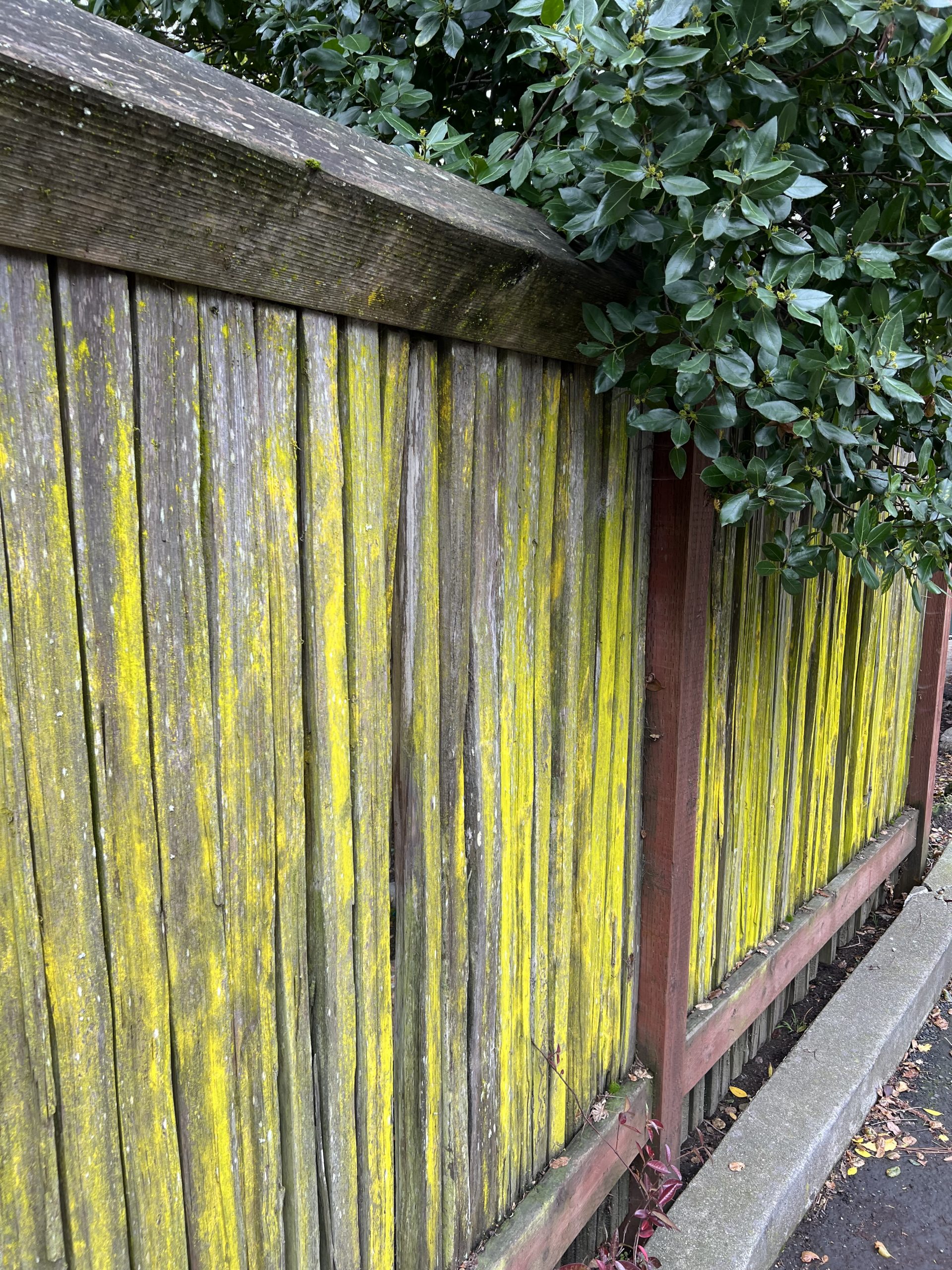
A fence along where I walked

Had a nice Shabbat dinner (minestrone, salad, cheese with tangerines and chocolate for dessert) and fellowship with Jean’s oldest friend and her new partner, Larry. He says it’s a miracle to have this connection with Janet at this age. I concur – we’re all living a miracle!

Easy clean-up since most of the cooking done yesterday.

A TV show that once again showed that it’s a vast wasteland out there.

Sleep.

Saturday 2/17

Coffee, snack, meds, talk, Today Show, watching the sky transition from grey to pink to cloudy to clear, . Hot tub.

Fruit salad, granola, yogurt.

Jean watching a podcast on Egyptian textiles and I’m writing this and reading more about Trump judgment. Got a text from Linda B: I’m going to sit for a portrait with her art group soon.

I’m problem solving re portable speaker and Jean is in her yoga room, then studio.

Lunch: another meat loaf sandwich for Mr. Adventures!

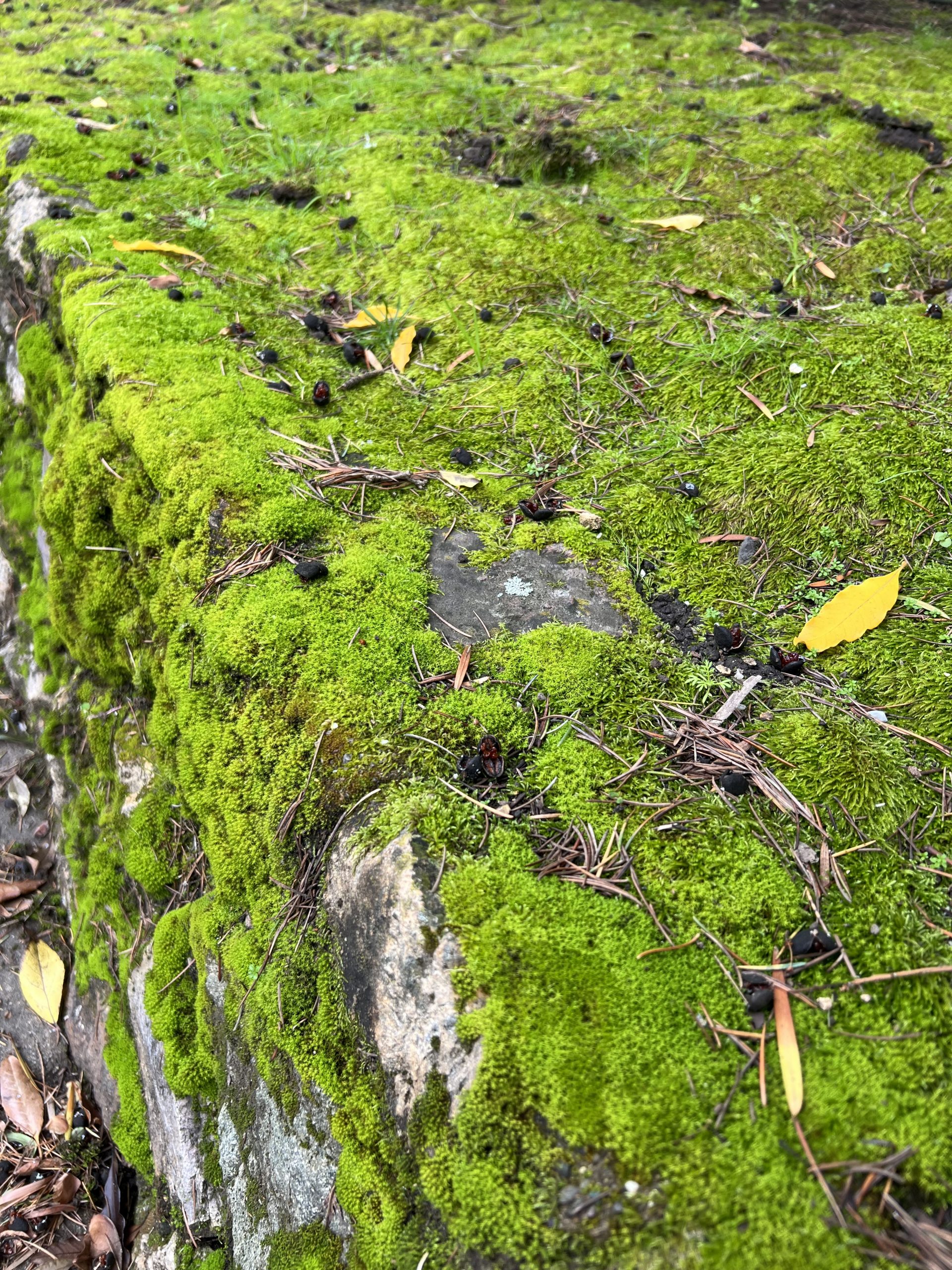
Stone wall, moss along where I walked

Nap together, lying in bed (again) talking.

I spent the rest of the afternoon writing, reading news feeds.

Jean was in the studio late afternoon, then came upstairs and fixed broiled salmon, salad, Acme levain.

Watched part of a French movie, L’Envol (Scarlet) – pretty good.

Slept.

Sunday 2/18

Coffee, snack, meds, talk, . Hot tub.

Dishwasher not working, so we unloaded a full load and started washing dishes.

I fixed omelet with goat gouda cheese, mushrooms, green onions, levain, ½ sweet Italian sausage each for breakfast.

Washed dishes.

Talked with someone on the phone regarding how to prioritize and coordinate medical care with a spouse. Wrote f/u text.

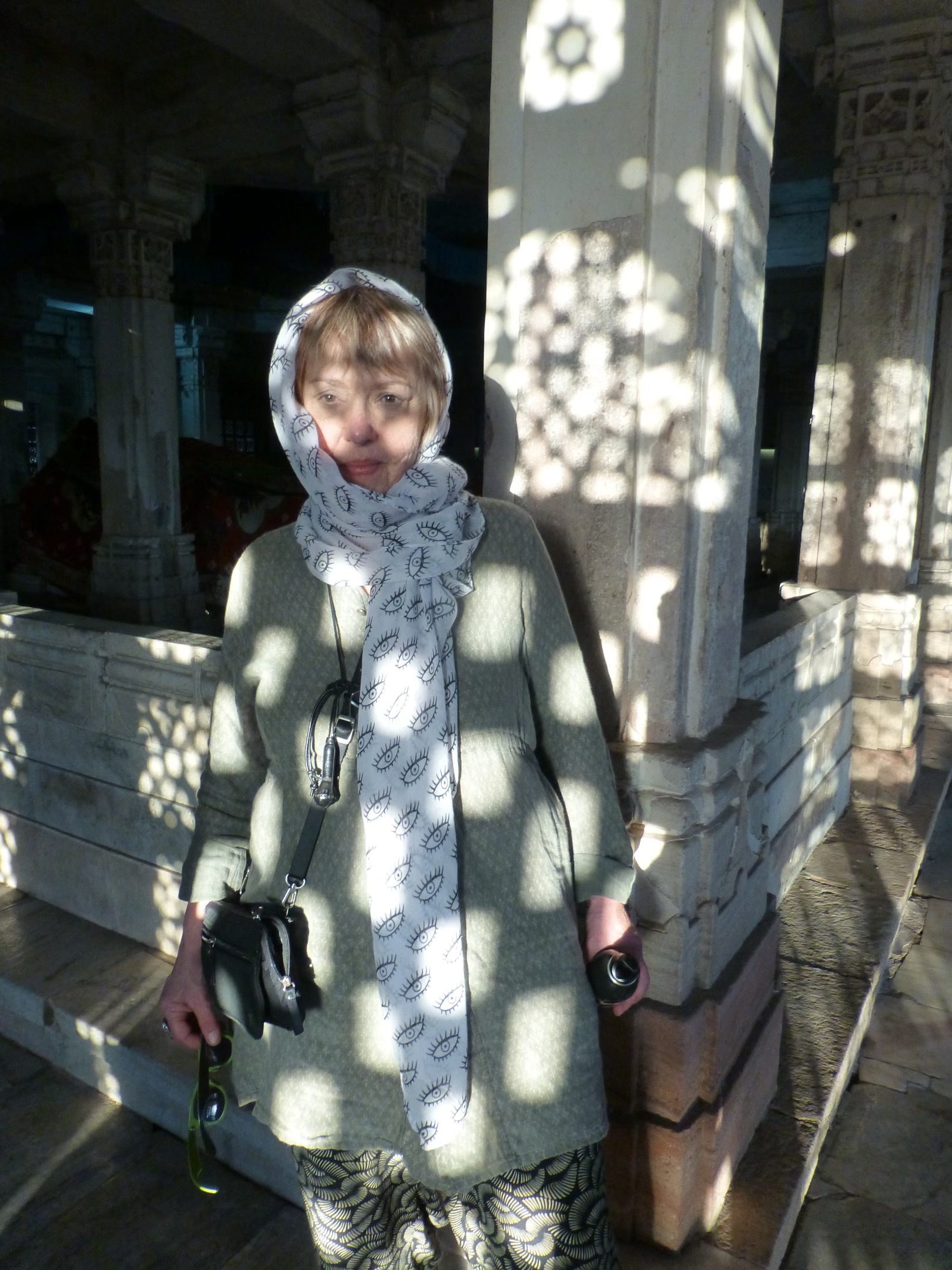
Jean in India about 10 years ago

Hi ——–,

In summary, the main problems that should be addressed quickly are:

Nausea and vomiting AND subsequent dehydration. There is an effective nausea medication (ondansetron) and he should have some at home as well as when in ER. There’s a good chance he’s dehydrated and in need of IV fluids now.

Pain – probably needing more than Tylenol or ibuprofen. Note that ibuprofen should be given with food to avoid stomach upset.

The past problem with ER should not influence you to avoid seeking care. They’ve already tried to make it right and may have to try more, but you should still go. You can also go to a different hospital. You should stick with him at ER to head off conflict.

The prostate and back are probably not priorities right now.

Wishing you and ——- well.

Charles

Went to MLK middle school track and we (or mostly Jean) walked with Susan. I’m using my iPhone to keep track of my steps these days. Most days I exceed my target.

Trader Joe for several things, including TJ salads for lunch

Lunch

Sunset from deck

Finish washing dishes

Nap, talking about life, including Jean’s friends M and V who recently died in their 90s, died within a few hours of one another, and lived independently and well in their house in the Berkeley Hills until death. There are many sad and even desperate stories happening among older people, including people we know. It’s well to remember M and V whose story is a triumph. And Jean’s friend, K, in her 90s, still in her home (with a fair amount of assistance). H and J, late 70s and early 80s, living in wooded hills near Point Reyes, growing quality cannabis. C and J, in their mid – late 70s, dealing with significant physical issues and living a beautiful life… We joined Ashby Village last year. Ashby Village is part of the village movement happening here and elsewhere. Through members and volunteers members work to remain in their homes as they age.

Talked with David.

Pilates exercise.

Writing this…

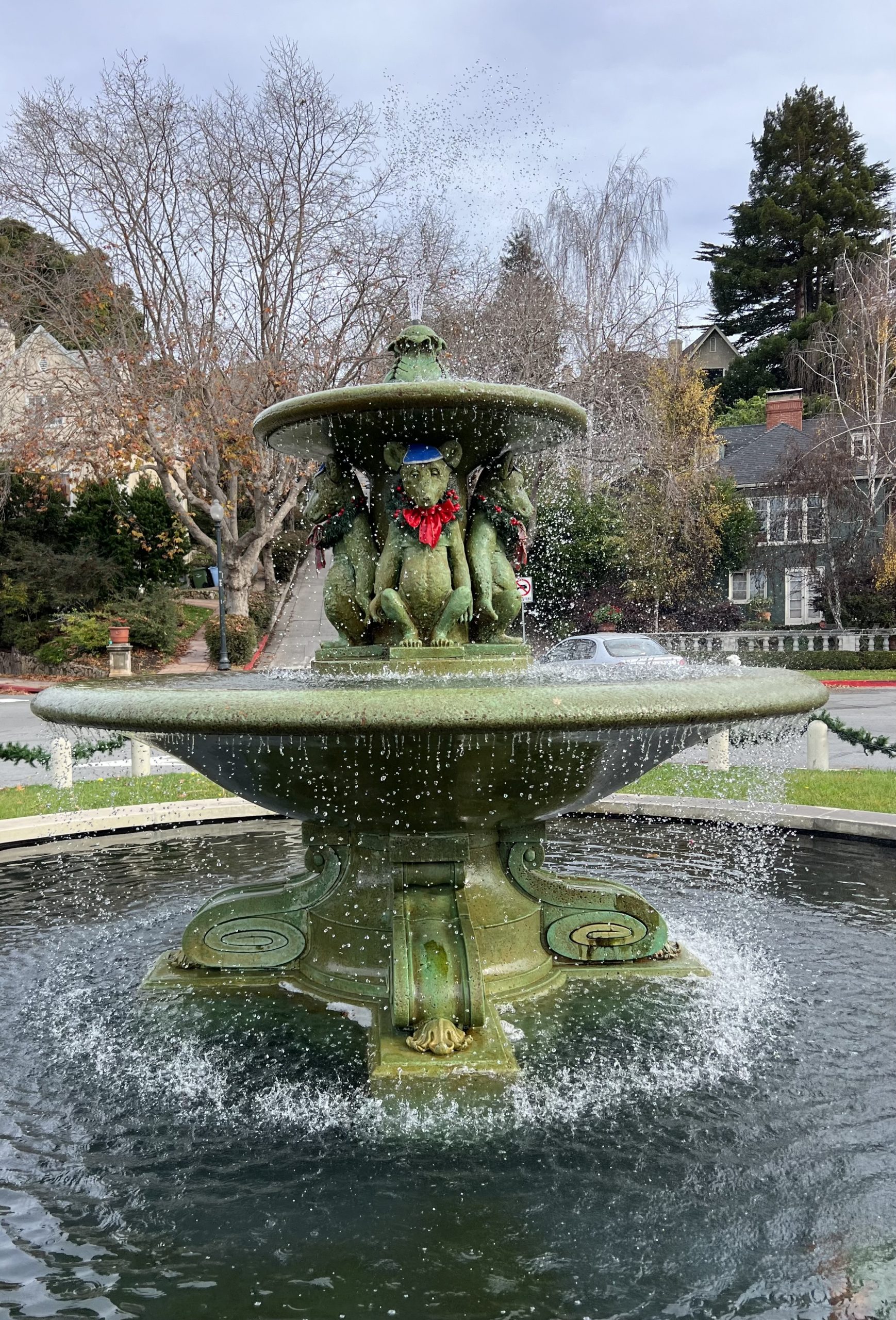
Fountain near the house

Reading news feeds. I read a lot of news. I think things are pretty horrible for many people around the world. I worry about the wars in Ukraine and Gaza. The news in the US, especially political news, is weird and unsettling. I’m unsettled.

Jean in studio.

Dinner was salmon in Indian curry paste (Sukhi’s brand) in coconut milk, cauliflower, slaw

Reading in living room, then taking a soak in the hot tub.

Watched movie, Scarlet) for an hour. Goodnight…

Monday 2/19

I woke up early and got up to write something re a neighborhood issue (whether the neighborhood forum is an appropriate place to discuss a petition to recall our county DA). Here’s what I wrote:

Reflecting on the question of politics entering this neighborhood discussion group, I see with greater clarity how much public safety and health are enmeshed in politics.

For me, personally, as I age and my physical abilities decline, a completely non-responsive Berkeley/Alameda forces me to live with a cracked, uneven sidewalk in front of my house (only one fall, so far) and a shameful lack of bus benches for impaired AC Transit riders like me. Because of so much urine on downtown sidewalks, I had to spread newspapers on the sidewalk to sit when I was unable to stand while waiting for a bus. Like crime, these are public health/safety issues and any solution to them will include politics.

I appreciate the opportunity to step out of my kitchen door to sign a petition to recall. I felt no pressure to sign. And I don’t feel there is a risk to neighborhood cohesion or relationships related to this discussion!

Fixed coffee, snack, meds, lay in bed talking, .

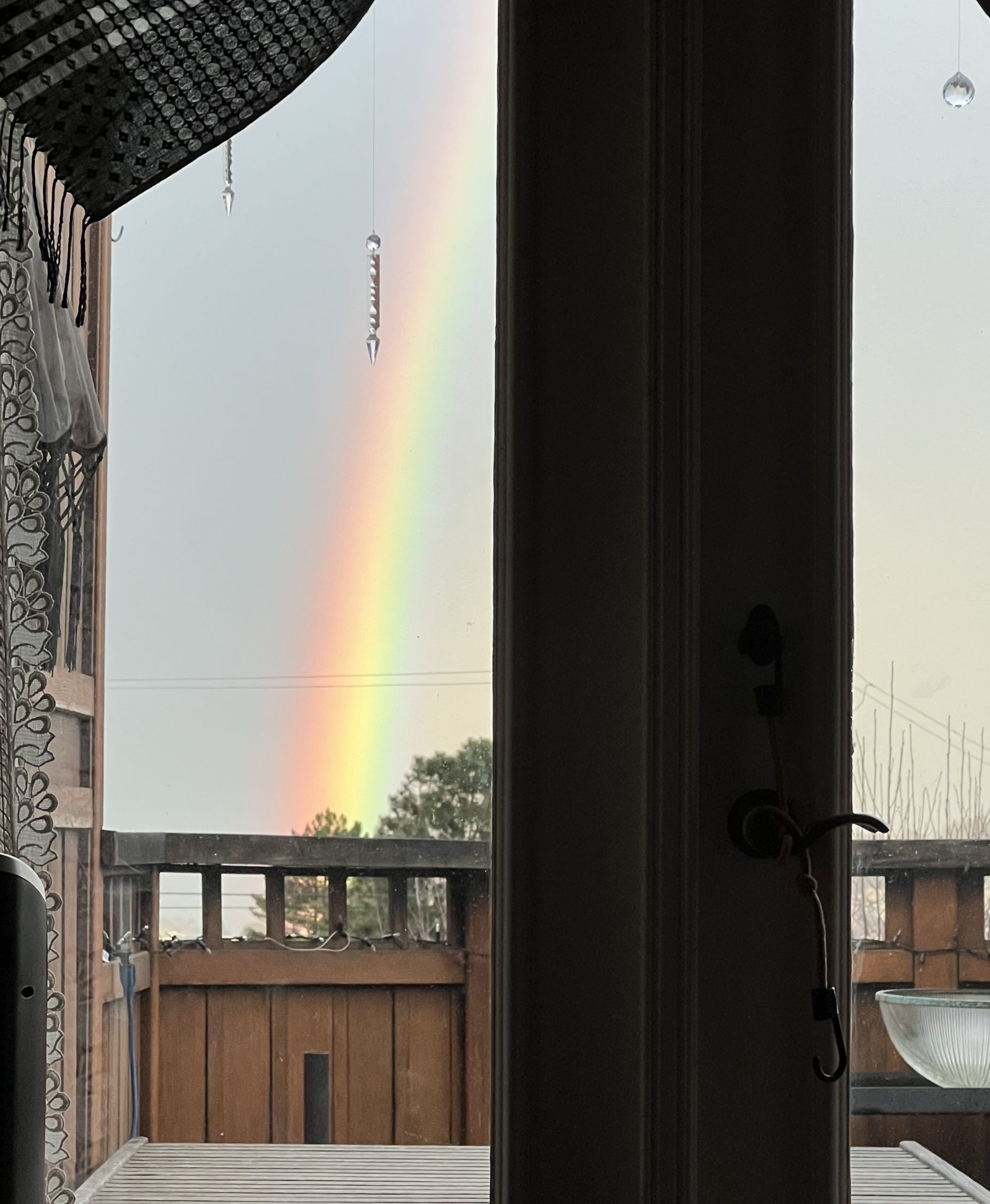
Oh! There’s a rainbow over The Bay!

Hot tub

Fruit for breakfast: Asian pear, pear, grapes, blueberries, strawberries, apple

Worked on medications

Installed color toner cartridges in color laser printer. I am smrt! I am smrt!

Night sky

Lunch: granola for me, smoked salmon and goat cheese for Jean.

Nap

I did a lot of nothing from 3-5:30, then to Sol’s for dinner. Sabich sandwich for me, mesquite smoked trout for Jean. Best trout since I lived in Colorado. Jean agreed.

Hot tub.

I chose the evening’s entertainment: Seinfeld and Young Sheldon.

It rained during the night.

That’s another week in Berkeley.

About the hot tub: I gave Jean a hot tub (or spa) for Christmas and she paid for retrofitting the deck so we could have the tub on the same level as bedroom and living room. It’s exactly 20 steps from the tub to the shower. Nice! Thank you, Sweet Thing!

Highway from Marathon to Big Bend. We’ll be on that road in a few weeks on our trip to Marfa and Big Bend

Along the railroad tracks

Some Sunday mornings David and I would drive in my blue Toyota long-bed P/U truck to the Santa Fe train yard near downtown. We’d sit in the truck and watch the yard-men couple and uncouple the cars, the mighty engines moving back and forth, tracks being switched, and all the other things that happen in a train yard. A few times security would tell us to leave, but mostly we just sat there having a good time, listening and singing along to a Hank Williams tape. We especially liked Honky-Tonk man, which David changed slightly – “Hey, hey, mommy, can your daddy come home” and then we’d always shout, “Yes!” And of course, Lonesome Whistle. We’d butcher those lyrics, too. David was two or three years old at the time.

When he was even younger, we’d be at home and hear that train whistle blow from the tracks near home, and Leslie or I would grab David, jump in the truck or car and drive to the tracks so he could wave at the engineer.

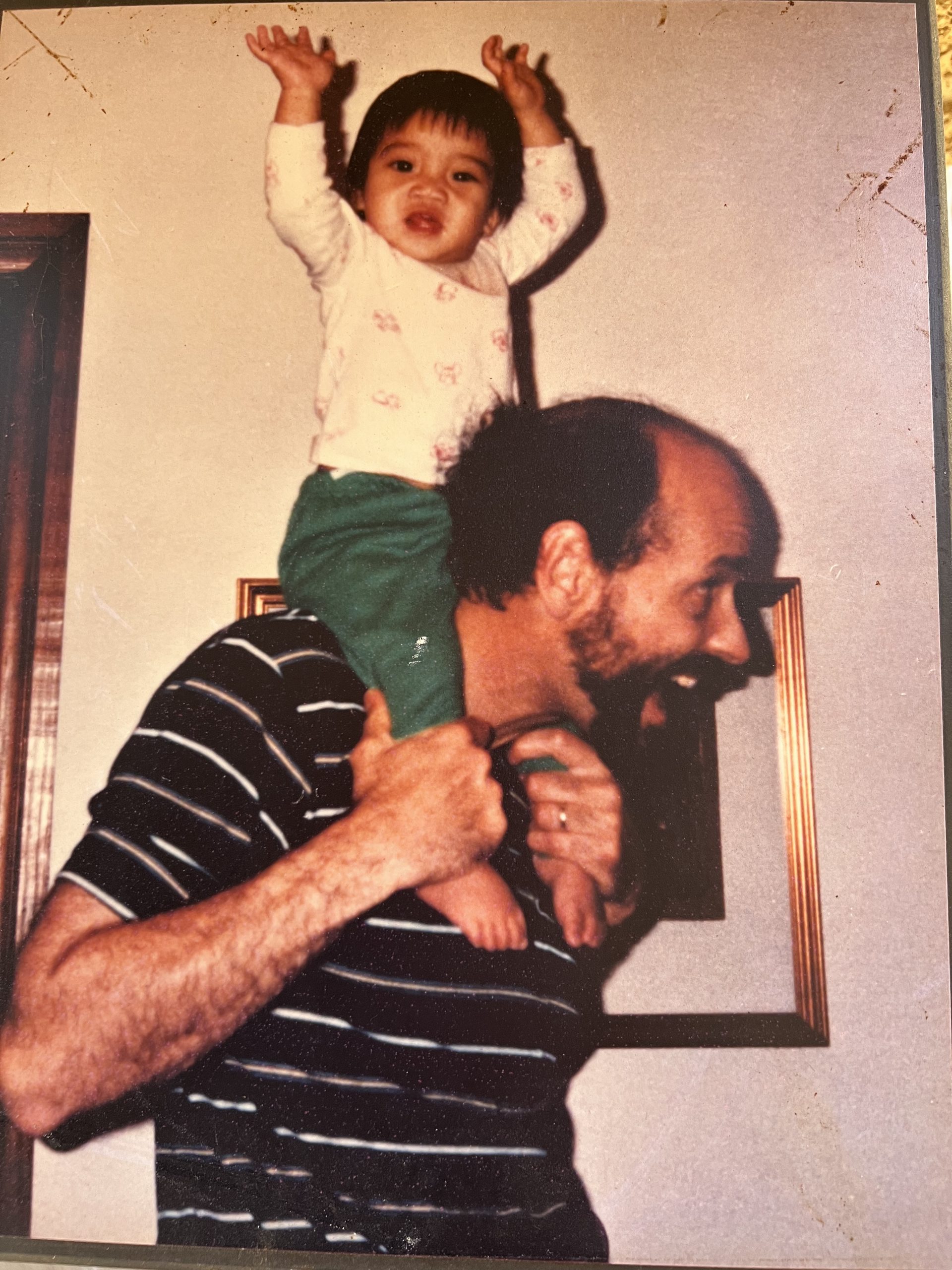
Other days we would walk along the tracks. When David was little, I’d carry him on my shoulders. Some of the engineers would wave at David and at least once, one of them threw us a little bottle of water. “Hey, little boy!” the man said as he threw it. “Hey little bow!” was how David reported it to Leslie.

Away we go!

When he was older, like 4 or 5, he liked to force his way through the underbrush along the sides of the higher track elevation or berms. (The tracks are long since torn out and replaced by the Santa Fe Trail.)

The Lakewood Country Club golf course lay along part of the tracks, so we usually found some golf balls along the way. We also brought home several hundred old rusty railroad spikes – some of which I have to this day. On the side of the track opposite the country club was a drainage ditch that usually had water running. When David was 6 or 7 we would build dams across the water and since it was running, there would just be more and more water, so the dams got bigger and bigger, but the water always prevailed. Sean from down the street and David’s lifelong friend, Chris would work on the dams when they were around. Still the water ended up flowing over or around the dam no matter who was working on it. In summers in the still backwaters along the ditch there were polliwogs!

Sometimeswe would walk as far as East Grand Avenue and get a treat at Doug’s convenience store. The man who ran the store would always give David a little something extra. We’d sit outside and have the treats, then walk back home. Sometimes Leslie would drive to Doug’s and bring us back home. David and I would relate our adventures to Leslie and my Mom. I look at those days akin to “Those Happy Golden Days.”

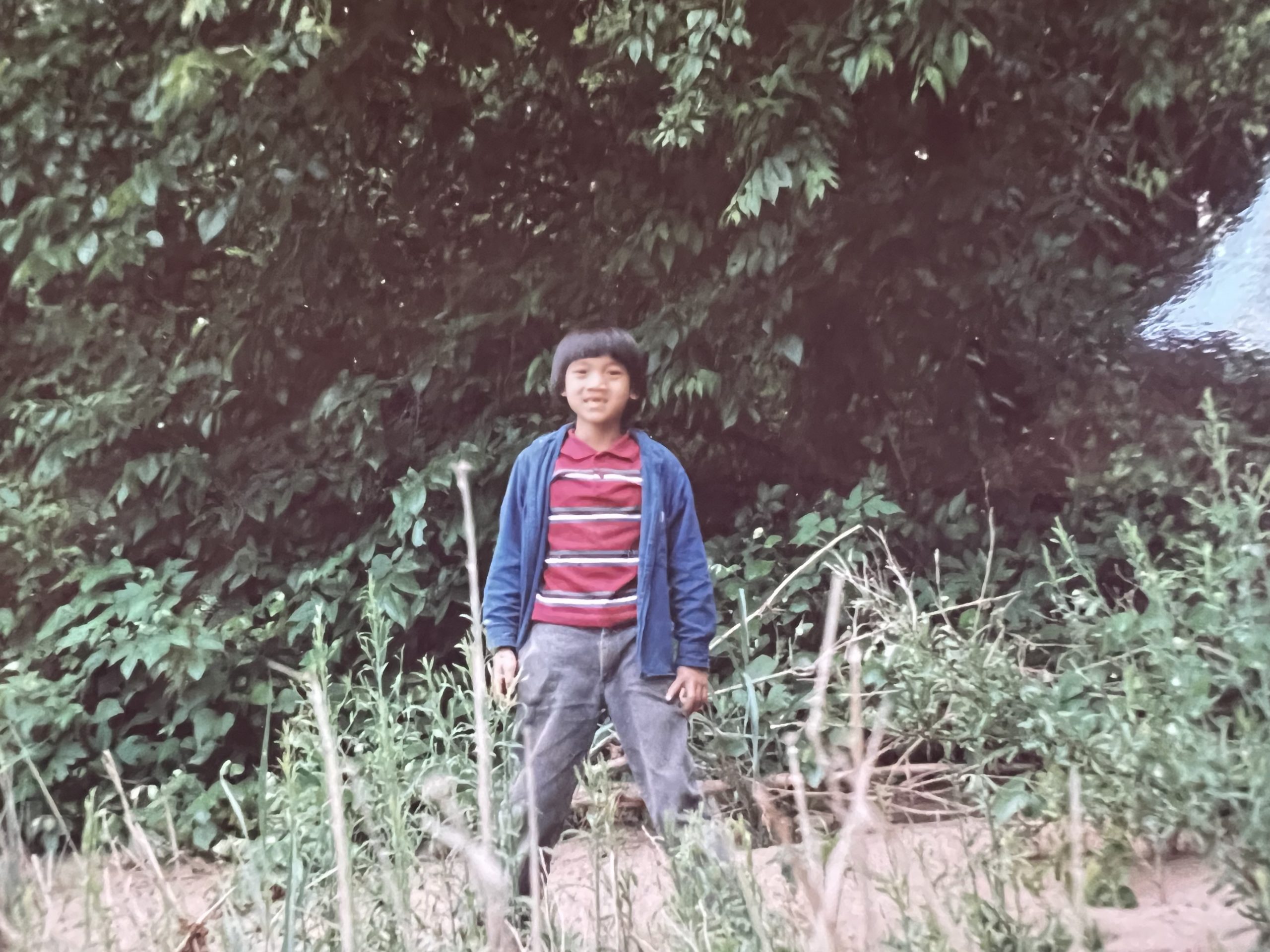
By the tracks: a boy who has proudly lost his two front teeth!

A mile or so past Doug’s was what we called the “big black bridge” – a black metal bridge about 50 feet over/above White Rock Creek. I’m guessing the bridge was around 200 feet long. Several times we climbed up the utility ladder on one of the concrete supports to the bridge tracks. I would go first and belay David on up, then we got quickly off the bridge. It always made me nervous to cross the bridge as trains ran regularly on the tracks.

There was a dirt road (long since closed) from Grand Avenue to the bridge. A few times we drove to the bridge to fish in the creek. Once two men approached us while we were sitting in the truck under the bridge. I didn’t like their demeanor and I cleared my .357. Even though the men couldn’t see the weapon, they could somehow tell they should give up on whatever they had in mind and they left.

It’s hard to remember exactly how old David was – maybe 3 or 4 – that time when we were deep in a bottom-land forest not far from the bridge. We were sitting on a log and I was telling him about the quest for the Holy Grail and suddenly it was as if he locked in completely on what I was saying in a way I had never seen before. It was a moment of wonder.

Well, I’m a honky-tonk man
And I can’t seem to stop
I love to give the girls a whirl
To the music of an old jukebox
But when my money’s all gone,
I’m on the telephone singing
Hey hey mama can your daddy come home

YES!

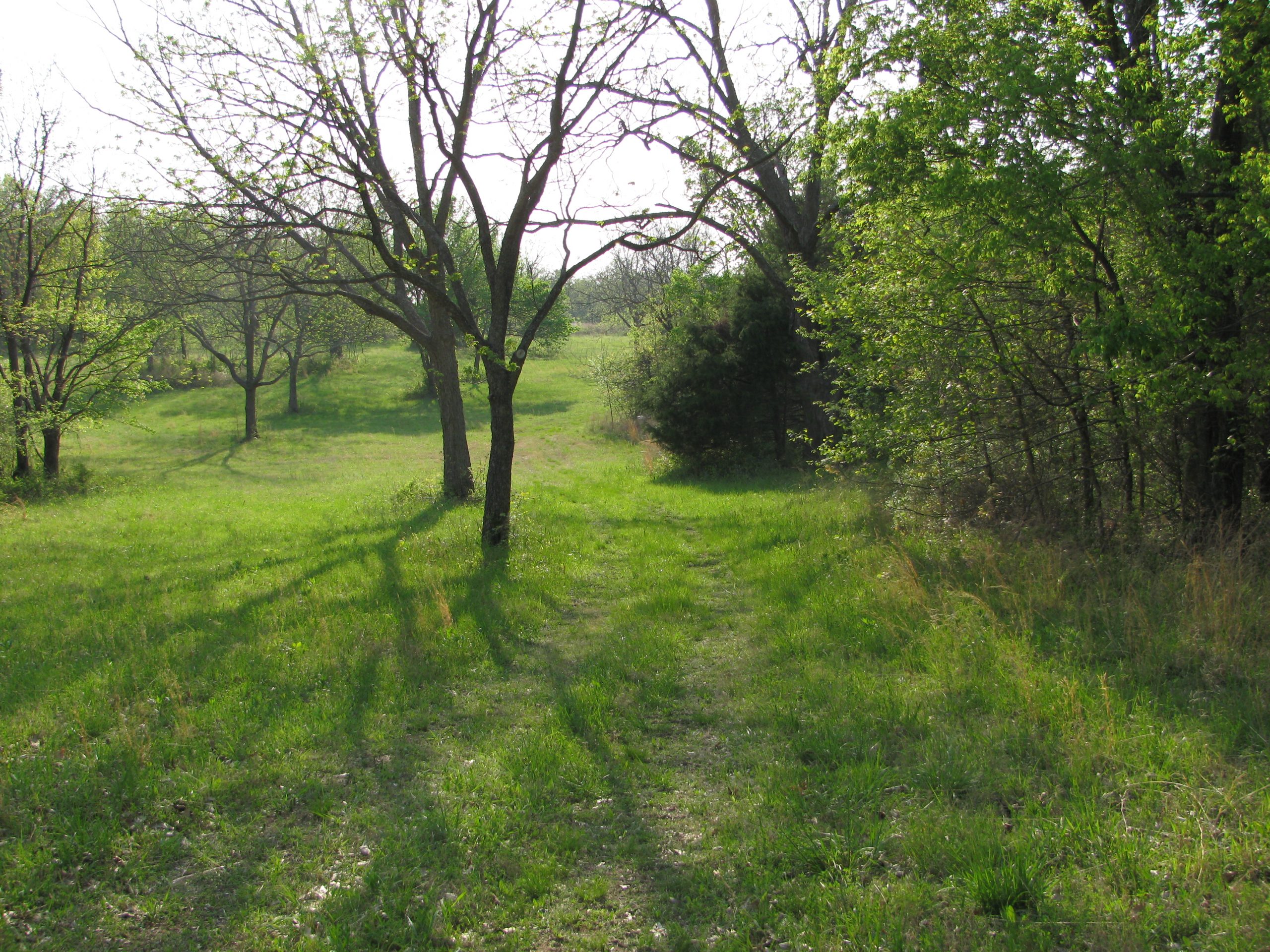
The secret road from Grand Avenue to the “Big Black Bridge”

A dream about grassroots grant-writing (of all things)

I’m grateful for this dream. Jean and I are in the habit of lying in bed in the mornings, having coffee, talking, watching our “today show” (the sky, birds, the SF Bay, the Marin hills, and whatever else we can see from bed), and having a short meditation on what we’re grateful for.

One thing about this dream is that the two themes were so vivid and intertwined – one theme being our surroundings as we walked along and the other theme being what I was saying and thinking. My recall of the details of the dream is far greater than most dreams I can remember.

_____________

The dream: Jean and I were walking in a warehouse district on the edge of downtown Dallas. I was telling her about the grants research and writing process I used beginning in the early 1980s. We were holding hands and walking through vacant lots and deserted buildings and…

I was telling her about the foundation directories I found at the Dallas Public Library, going through these big books page by page writing down information on foundations whose areas of interest matched my own (especially healthcare, refugee, and justice issues). I also kept information on foundations with board members I had some connection with, no matter how small. I was thinking in detail about the area of the library where the foundation books were kept.

We were walking on paths winding through dry, sun-blasted vacant lots and sometimes on concrete floors with broken glass in big empty buildings like old steel mills. There were a few people around – they seemed like about who you’d expect in that sort of environment, many broken, some might be dangerous, and I was greeting people the usual way: “Hey now” and I was talking about …

the proposal-writing area in my office – a ~3×8 plastic table divided up into labeled squares for the documents that had to accompany proposals, like 501 (c)(3) docs, annotated board member lists, budget documents, etc., etc. and telling Jean about sending proposals every few weeks, each one rewritten and better than the previous one. At the same time I was teaching and volunteering and delivering services – building a reputation and I had a reputation.

The environment we were walking in was deteriorating, becoming a little more ominous, a real desolation row. I was glad I’ve been in these sorts of places before. A mentally ill kid, a teenager walked alongside of us for awhile. We walked past a woman with eight Doberman pinschers. I was relieved to see some condos ahead, but when we got to them we realized they were public housing projects and run-down like everything else. A young woman met us as we were walking up to the buildings. She was a little weather-beaten, tanned. She was wearing a green skirt with a fringe on it; she was looking something like some of the people at the Rainbow Gathering, pretty run-down herself. She offered to take us in to one of the apartments to “see Don” – I said “No, but thank you” and she was like a classic case of a shrug and whatever.

I was telling Jean about writing proposals for Vietnam veterans services, refugee health, and drug treatment and prevention. I knew I wouldn’t get funding from my first proposals, but I didn’t care; I was learning how to do it. I started with the most obscure and least likely foundations and worked my way up the ladder to bigger and better-endowed ones.

Everything was pretty desolate and we couldn’t see downtown anymore. I jumped across a ditch and Jean took three steps to her left and got across on a level place. We were both getting tired (but there was no place to stop). I asked Jean if she needed to pee and she said no and then I awoke and got up to pee. That was the end of the dream. I wrote all this down at 0530.

___________________

In most years when I was writing I averaged bringing in around $100,000. I also initiated other means of development as it’s essential for nonprofits to have multiple streams of income. I never saw any of the money personally, but I accomplished most of what I set out to do: a lot of people got help – from broke-down veterans to “jaded, faded junkies” to children impacted by drugs to refugees and immigrants from across the world to children who were abused to people at the end of life. I had a dream of the world as a better place, less suffering, more justice, all that.

Money for changing the world https://ckjournal.com/money-for-changing-the-world

A ceremony at the Medical Examiner’s facility

Khmer Rouge/death coming to a village

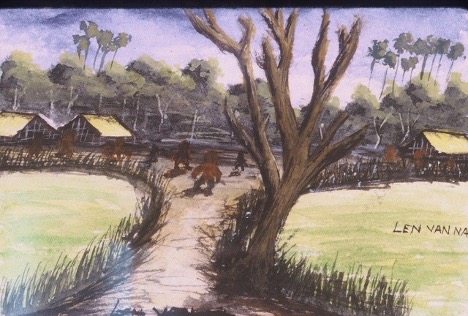
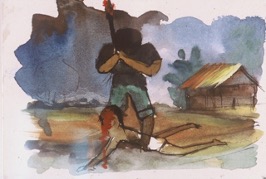
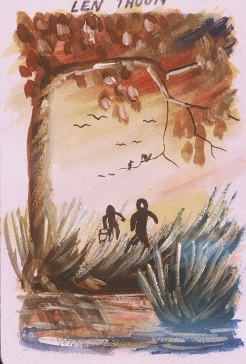
Paintings are by children at Khao-I-Dang refugee camp on the Thai-Cambodian border.

Sometime in 1981 I got a call from a friend, Kevin who taught courses in infectious diseases at Southwestern Medical School. He asked if I wanted “to put in some PPDs” (tests for tuberculosis). “Sure,” I said. Leslie wanted to go and we met my friend at a two-story house on Sycamore Street near the corner of Carroll and Live Oak Streets. The house was called the “Welcome House” and there were several newly arrived families from Cambodia. Refugees. They were all thin and traumatized from war, torture, concentration camps, refugee camps (which, by the way, are not nice places), and travel to this foreign land called Dallas.

Kevin and I put in the PPDs via needle just under the skin. I was struck by how quiet everyone was, including the children, even when I slipped the needle in. Meanwhile Leslie was having a good time holding a baby. I remember Leslie was wearing a pink tank-top and afterward she was captivated by the baby scent that clung to the fabric.

Khmer Rouge killing

A day or two later the refugee agency caseworker called me sometime in the early morning. “Kao Ly, he already died” (name changed). I didn’t know what else to do so I drove to Sycamore Street. “Kao Ly” was a middle-aged man with four or five sons and a daughter. He was, in fact, lying dead in a bed he shared with several of his sons.

An ambulance took his body to the medical examiner’s (ME) office where he was held for several days for autopsy. During that time, another Cambodian family took care of the children and the caseworker arranged for them to go to another state to live with their mother. The ME was holding the father’s body I guess because they were waiting on toxicology. We wanted to have a ceremony before the children left.

Someone knew a Korean monk who was willing to hold the ceremony and that’s how we ended up on the loading dock at the ME’s facility, a several story building adjacent to the county hospital. At the time Dallas County had a population of about 1.5 million people which meant a lot of corpses processed through that building. The building smelled of death. There were Christmas lights on the dispatcher’s glass-fronted cubicle and some Pepsi cases stacked along the wall. Someone wheeled the body out, covered in a sheet up to just under the chin.

Running away

There was the body on the gurney, and beside it four desolate children and the monk wearing an orange robe. Over to the side was the refugee caseworker and me. The monk lit incense sticking up from a can with sand in it, he lit a candle, he extended a string from the body to the children with each child holding on to it, he chanted in Pali for awhile, and then he reached into his robe and pulled out a pair of scissors and he cut the string between the body and the children. It was a powerful moment in the midst of all this death and suffering.

The children went to live with their mother. I’m still in contact with several people who passed through the Welcome House when they were children, though I’ve lost touch with the family of the man who died. I know that at least several of the children from that family have done well in life.

Children at Khao-I-Dang refugee camp

It’s a Hard Road, Daddy-O

It is commonly thought that as we grow older we become less flexible in mind and body, less able to adapt to change, less resilient. There is truth in that. And falsity as well.Near Saratoga Springs

First, some truths: with aging, skin becomes less supple and eventually begins to wrinkle. Our bodies change and seldom for the better. Mortality becomes more and more real.

As we age, times change, but we have difficulty changing with them as we once did. Music moves on as we stay put somewhere in the past, stuck in the Beatles, Johnny Cash, maybe even the Five Satins (Shoo-doop un shoo-be-doo). Fashion changes and we fall further behind what’s happening today. Indeed, if we were to try to be really up-to-date in our clothes we might begin to look a little foolish.

And yet, how much change can a person deal with? How much change have we already dealt with? Most of us still alive have dealt with unimaginable grief, terrible physical and emotional pain, wars and rumors of waNorthern Californiars, being fired from a job, divorce, childbirth… the list goes on and on.

Grief. Many of us have lost our life partner. The pain of that is close to unbearable. Yet we bore it and kept on in life. A few have lost a child. We have all lost our parents, grandparents, and many friends. Each death is a reminder that we, too will pass from this earth. As time passes, the pace of loss picks up. People get sick, friends die, beloved family members die, pets die. Our bodies run down, our minds run down, we get sick…

The times we’ve lived through boggles the mind: the end and aftermath of WWll, Korea, the 1950s, rock & roll, Berlin Wall goes up, civil rights (the endless struggle), women’s liberation (another endless struggle), outer space, sexual revolution, drugs/inner space, assassinations, Vietnam War, Berlin Wall goes down, Watergate, gay liberation (another endless struggle), computers, internet, Afghanistan War, Iraq War, terrorism, gun violence, Trump/Jan 6, War in Ukraine, and so much more!

We know a lot about resilience. We laugh, we cry, we love, we hope, we experience beauty, we enjoy. It is a hard road, and here we are.

Giving thanks

Photos: I’m having difficulty posting photos. From the top, these are taken in upstate NY, Northern California, Oakland

“Shrink and disappear, little wretch!”

Third and last radiation treatment…

“Shrink and disappear, little wretch!!!” Message to the tumor from my niece, Mary.

The way it went for me: Jean drove us in the van to Dublin where the Kaiser radiation oncology unit is. The first time in Dublin we got there early, had a snack, hung out in the van, and went to the cancer center. The second time we took a sandwich and went to a park that Jean found via google and had a picnic and a nap with a cool breeze playing over us. The third time was like the second. I love it so much that Jean likes picnics and naps together like this.

I’m on the tray

At the cancer center I check in, wait a short while (meanwhile, Jean was running errands, walking), and they take me back, through the corridors, through the massively heavy 4” thick door into the room. I lie down on the plastic mold of my shoulders/torso (made on the previous planning visit) on the plastic tray and grasp the handles over my head. The radiation therapists move me in small increments until several bony landmarks of my body are aligned with the machine that will beam the radiation into my body, into the tumor. They leave the room and it’s just the machine and me. The plastic tray and I slide into the machine and I’m lying still, breathing however it is I’m breathing (it seems a little fast to me) and there are beams of light (red and blue? I’m not sure) and some things like appendages – to my left a flat thing, a blank plastic rectangle about 24” x 14” and to my right, a round thing, maybe 22” across with a ~8” glass square in the center like a window and there’s a third thing like a rectangular box and those three things slowly, silently rotate around me, sometimes it seems on different axes. So I lie there, very still and after about 15 minutes the machine powers down and the plastic tray and mold and I slide out. The RT is there. “Do you need help sitting up?” “Yes, thank you.” Experientially, it seemed like nothing happened except a little discomfort. Actually a lot happened. Beams of seriously high energy that breaks the DNA of the cancer cells and thus their ability to replicate/grow/spread.

The first time I was irradiated one of the radiation therapists and I talked for awhile. She told me that school for radiation techs takes about two years. School for radiation therapists is an additional 1.5 years, so 3.5 years to be there, getting it all right every time. I used to teach that part of being a patient was literally giving your body to another person/people and that trust was essential. True. The therapist was helpful to me – moving me a little farther along in the process of integrating these new realities, becoming little more connected. I felt like she was a truth-teller. Can’t do any better than that.

——————-

For about 6 or 8 months I took Phana for weekly chemotherapy infusions and related at Presbyterian and MD Anderson. At Presbyterian when someone finished a course of chemo they rang a bell and everyone clapped. “They’ll never ring that bell for me,” she said.

——————-

Phana and me, 30 years before she passed. Sigh.

Even caught early, with good odds of surviving it’s still realistically pretty heavy shit to have lung cancer. I feel almost dramatic when I say that, but you know, it is pretty heavy.

——————-

Route 66

Many years ago I had a patient who had triplegia as a result of a radiation injury. He walked into the hospital and came home paralyzed in three of his four limbs. He lived with a prostitute and some other people in a shotgun house on the frontage road of a freeway. (A shotgun house is a cheaply built house, narrow, one room after another so that a shotgun fired through the front door would clear the whole house.). There was a bedpan and they put him on it and because the people in the house didn’t know anything and he couldn’t feel anything they left him on it for a couple of days. I got there and we got him off, but the blood supply to the tissue at his sacrum had been cut off for several days and over the next week or so, he developed a large, deep decubitus ulcer at his sacrum. I kept it as clean as I could with some help from the woman. She was a heavy drinker (they all were) and that and the nature of her work meant that she was gone or indisposed a lot. She was a nice person and I dug her, but she wasn’t dependable.

Several times when I was there the man was watching a TV program about sewing called Sew What’s New, which seemed odd since the program was hosted by a man all tricked out in pastels and lace and the live TV audience was all older white women and the patient was from streets, maybe pimping the woman, who brought her tricks through his room and on into her room. The ulcer/infection went into his bone and he became septic and died.

Way up into the alpine… rock, snow, ice, air.

A year or so later I saw the woman on the street. We talked for awhile. She still seemed nice and she still had that unpleasantly sweet alcoholic smell.

——————-

My friend Joyce had 10 radiation treatments a year or so ago. Plus some other stuff. She’s doing fine. No evidence of recurrence. I know I’m getting off lightly, so far.

——————-

David and me backpacking in Grand Canyon

When I was in my early 60s I began to look around, thinking about what I would do with the rest of my life. One answer was already clear: I would continue backpacking as long as I was able. The more time I could spend in the wilderness, the better. Wyoming’s Wind River Mountains became my place. I was in the Titcomb Basin four times, along the lakes, to the foot of the glaciers, in the alpine. The alpine, higher than any tree can grow, like magic to me. The Cirque of the Towers, the Highline Trail, Jean Lakes, Knapsack Col, Twin Glacier, snow, ice, rock, milky glacier run-off water, air, tiny alpine flowers, on and on. Also Big Bend, Sangre de Cristo Mountains, New Mexico, and more.

Another answer was to keep on traveling as long as we could. A typical trip was tickets from Dallas to San Francisco to see David to Hong Kong to Hanoi and 6 weeks later return from Bangkok to HK, SF, and home to Dallas. During that 6 weeks we’d ride buses, trains, and planes to Sapa, Hue, Saigon, Phnom Penh, Luang Prabang, Chiang Mai, Bangkok, etc. After Leslie passed away, Jean and I traveled to NYC, Barcelona, Granada, all over Wyoming, Colorado, and of course, California.

The Atrium Obscurum crew, meeting before the gathering

Sonic Bloom in Colorado

I also reconnected to my hippie roots through connecting to psychedelic medicine and to the psytrance scene. Talk about blessings! Try taking this in: I’m sitting with Jeff, my best friend since the war in Vietnam – we’re by a dirt dance floor somewhere deep in a forest in East Texas. We’re rolling very, very strong, I’m sitting next to a man I’ve loved since 1966, the music is loud, people dancing, dancing, I’m dancing, the stars above, pounding music through the night, into the day, and into the next night, and along the way I took the music in and was experientially connected to the psychedelic trance scene. The connection deepened over time and I joined Atrium Obscurum, a crew that was putting on forest gatherings in Texas. I went to gatherings in Texas, Oklahoma, Colorado, New Mexico, and Arkansas. Sometimes I taught classes on the end of life, PTSD, and psychedelic medicine. It was an amazing time in the reality of the global underground.

https://ckjournal.com/psytrance-trance-trance-culture

——————-

When I finished my course of radiation, the nurse asked if I wanted to ring the bell. I said, no thanks – in tribute to Phana and because (so far) I’m getting off very lightly.

From our deck – Mt. Tam in the distance