Renee Good: Biblical parallels

Jesus said, “Forgive them for they know not what they do.” Luke 23:34
The soldiers went ahead and killed Jesus.

Renee said, ““That’s fine, dude. I’m not mad at you.”
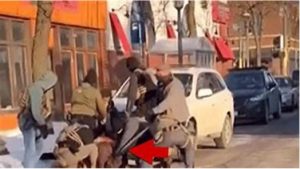
The ICE agent killed Renee (and he videoed it!).

Renee Nicole Good Renee Good has long, blonde, curly hair and is wearing a red off-the-shoulder top. The ocean is in the background.

The soldiers played at dice for Jesus’ clothes
After he killed Renee, the agent said, “Fucking bitch.”

The agent’s father said, “He’s a committed, conservative Christian…”

Jesus wept.

Her name was Good.

Just following orders: For Senator Mark Kelly

Just not following orders. 

“I was just following orders.”  It didn’t work for the nazis and in the end it won’t work for Trump’s minions. Here is an account of not following orders that somehow became something bigger than a brief altercation. I don’t think it was an unlawful order or even that big a deal, but when it was over I realized we’d been playing for higher stakes than I thought – my soul. What follows is taken directly from my blog post, Vietnam 66-67, Part 2: Hill 55, Dodge City.

The point is to affirm that decisions and actions can have positive and/or negative consequences.

Standing with Senator Kelly 

***

It never occurred to me that I would write this. It was something to keep secret and inside me forever; something to take out now and then, turning it over in my mind like the treasure it is (to me, anyway). I told Jeff a few years ago, but he already knew about it, even though he was not on that patrol.

We were on a long patrol – past even Dodge City. It had been raining for several days or maybe several weeks. I had this raincoat that was far superior to a poncho. I doubt many people ever wore a poncho past their first gunfight with one of those awkward things in the way of everything – I loved my raincoat. We were 3-4 days out, in an area we’d not seen before. We came to a ville (village) and moved around and through it. The plan was to round up everyone in the ville and search the place and people for weapons.

I came to a hooch (hut) with a bunker (all the hooches had bunkers in that neighborhood) and inside the bunker were several women and some children. The interesting thing was that one of the women was wet – even her hair, which told me pretty clearly that she had been doing something in a hurry before we got into the ville, i.e., she was VC. The other woman was holding a baby and the baby was crying, the thin, weak cry of a very sick baby.

I was standing there looking at them and it was like I could see myself as they saw me. I was death – unshaven, dirty death. The only clean thing about me was my machine-gun and

 it was immaculate. The gun oiled, every round in the 200-round belt perfectly cleaned, inspected – all truly perfect. I was looking at them and they were looking at me.

I was thinking, screw this. I’m not going to jack with these people. So I just stayed there, watching them. I had decided not to force them out, but not wanting to be killed, would never have taken my eyes off them. So we’re there, they, no doubt wondering what is going to happen and me, just very comfortable with my decision. At some point I tossed a couple of cans of C-ration ham or whatever into the bunker. They probably thought I was tossing grenades – they never touched the cans.

Then trouble. The lieutenant running the patrol came over and the interaction went something like this:

“Get those people out of there.”

“There’s a sick baby in there.”

“I don’t give a shit. Get them out of there.”

“There’s a sick baby in there.”

“I said, get them out, now.”

I was thinking, I guess I’m going to have to kill him, but he read my eyes and saw what I was thinking before I could act and he pointed his rifle in my direction (he always carried an M1 carbine, a silly weapon for which I had only contempt – but, an M1 pointed at someone trumps an M60 in the other direction, if you know what I mean) and there was nothing I could do because my weapon was already pointed pretty much down and to the left. Even though I was a lot better gunfight-wise than this guy, there was just no way I could get to him faster than he could get to me.

“I’m giving you an order, Marine. Get those goddam mother-fucking people out of there right now!”

Then two things happened.

The Big Hair (Harris) was off to the side and he put his weapon on the lieutenant and said something like, “Be careful, lieutenant.” Whew, what a relief. Then, the people in the bunker started coming out! The lieutenant walked off muttering threats. Harris smiled at me. “Yeah, man – fuckin’-A.” When the woman carrying the baby came out in the rain I stopped her and I took off my raincoat and gave it to her. She had no clue what that was about so I had to drape it over her. It was like the coat of a giant to her. Ridiculous.

I remember leaving the ville with all those people standing there in the rain and that sad-sack woman with her sick baby standing there with my raincoat dragging the ground.

Redemption song. Making a choice. I chose Life.

Thoughts on life review at an advanced age

The final stage or conflict (or state of mind or life theme) in life is integrity vs. despair. As with so much else in a person’s life, these states of mind are not necessarily clear-cut. I think what we want to do is incline ourselves toward integrity vs. inclining toward despair or kind of drifting along with under-lying despair. How does that happen?

Andy’s Dream by Jean Cacicedo. Used with permission.

I believe it’s true that we’re generally doing the best we can under the circumstances. Most of us could sometimes do better, but still, looking back, not bad.

It’s not about accomplishments in the common use of that concept. For some people it’s a great, great accomplishment to be a half-way decent person – to not be abusive or mean. I mean, wouldn’t it be a beautiful world if everybody was non-abusive, not mean, not a cheater! So yes, good work, mate!

One way to move toward positive resolution (integrity or integration) is to deepen one’s life review. I say “deepen” because most people do think about their life, even when they try not to think about it. Too often we focus on negatives, losses, mistakes, failures, bad things beyond our control (like a hard childhood or poverty or death), and stay stuck on those parts or even pretend that they don’t exist. But they do. How does one get past failures or lacks in life? Here we go with one conception of the deepened life review.

(Life review is a psychological, emotional, social, and ultimately spiritual process of exploring one’s life past and present, how it unfolded, choices made, relationships, losses, patterns, themes, values, and other core dimensions of a life.)

One way to review in a holistic way is think about in detail 5-8 things in each of the below categories:

  • What is missing in life now (people, activities, abilities).
  • Wonderful things that have happened.
  • Regrets and mistakes and bad things that happened, including those we had no control over.
  • Hard times and getting through them.
  • Good moves/accomplishments.

Looking closely at these, we can see that there may much to grieve, there may be things that have wounded us, things that have wounded others, things that are hard to see and accept, things that were and were not our fault. It is my firm belief that going deep into the negatives is necessary to really see the positives – the beautiful things, the life accomplishments, the strengths, the beauty in not being mean.

Ahhh, the beautiful Wind Rivers

There are other life review processes. My focus is on words, but of course there are other means of expression such as art, music, and other ways of self-expression. Many include recommendations to do it as part formal group or with professional guidance. That’s not necessary. Google or ChatGPT will yield several structures for doing one’s own life review.

Life review processes or techniques include:

  • Mapping time, e.g., a history of life (key events, motivators, people, emotions, decisions, stressors, etc.)
  • Taking a deep dive into turning points and thresholds (what was life like before and after and after the change, what inner and outer resources were involved, what was left behind and gained, and what issues still linger).
  • Writing letters to my younger self at three specific ages/turning points.
  • Writing four to five “stories that made me who I am today,” including lessons learned.
  • These are directed toward integration vs. nostalgia.

It is a worthy thing to do is write one’s obituary, eulogy, or things you would like to be remembered for after you die.

6 am

This is written with the idea that some readers might consider this for themselves. Any age is a good time to do it. Old age is an especially good time to do it.

Background: Based on experience and other explorations of life and death I developed training for staff in the first hospice in Texas. Training included values clarification and life review for everyone who would be working in hospice (originally called the “obituary exercise”). The idea was to increase self-awareness and thus increase understanding and empathy around this major life event – the end of a life. Every training, class, or workshop included a lot of content on the practicalities of physical care at the end of life. Variations on the initial training continued in the original hospice, other hospice programs, workshops, and into undergraduate and graduate courses on the end of life. I also taught values clarification and life review as tools to use in working with patients and families facing the end of life.

We were at a friend’s home, talking. My friend said, “I haven’t really accomplished much in life.” I looked around and thought, “What a beautiful home and life you’ve created. Actually (I thought) you’re a truly beautiful person.”

Life review – thoughts

I began listing a few things I miss in my life now. I tried to limit it to 5-8 things. That led to consideration of beautiful times, which led to…

Things I miss

  • Leslie.
  • Backpacking in the wilderness.
  • Being a part of the global underground, especially trance gatherings in the forest.
  • Related to the above, DMT, MDMA, LSD/psychedelics, smoking cannabis.
  • Smoking cigarettes.
  • Of course I miss being strong, quick, pain-free, all that kind of thing.
  • I don’t miss work, though if I was younger and stronger I would certainly be deeply invested in working as I once did. I just don’t have much strive left. I feel that I did the best I could – I left it all on the field.
  • Gardening.
  • Sunday mornings with David, like at the rail yard; having lunch every week with David in California.
  • Flying across the mighty Pacific in a 747 on the way to or from another two-month trip to Asia.

Some beautiful times

  • Being in the chow hall they had set up for the sole use of Marines returning from Vietnam and I was eating chocolate cake and drinking cold milk (as much as I wanted!) and listening to Groovin’ by Young Rascals on the jukebox. I was alive!
  • Getting to the bottom of a >1000 foot glissade down Twins Glacier in the Wind River mountains past the crux of a great trek and it was my 65th birthday!
  • Sitting in the kitchen with Jeff in the apartment on Oram (so homey, walls with a little sideways slant, painted yellow), coming on to Orange Sunshine. Truly, truly, everything was perfect.
  • Marrying and being married to Leslie.
  • Being in Burma, being exactly where Supilawyet sat “By the old Moulmein Pagoda, lookin’ lazy at the sea…” In Kathmandu, Bangkok, Saigon, Sapa, Hue, Granada, Santa Fe, Mendocino, Berkeley, all those places!
  • Being on a 747 coming home after two months in Asia at the perfect intersection of the perfect trip and going home.
  • Being married to Jean, living in Berkeley, living in Northern California!
  • My work (hospice, refugees, teaching, scholarship, serving, being part of the good).
  • Sooo many mornings lying in bed, having coffee together, talking…

Mistakes and regrets

  • Being a fuck-up in elementary and high school.
  • Smoking cigarettes.
  • Saying stupid things (multiple instances).
  • Wasted time, especially related to anger.
  • Never getting straight with my father – I’m not talking about forgiveness; it’s something else, but I’m not sure what.

Hard times

  • The war in Vietnam, especially the Hill Fights
  • When Leslie was sick and after she died.
  • Much of my childhood and teen years.

Good moves/accomplishments

  • Learning to be a good parent – Thanks, Leslie!
  • Being (for the most part) a good husband to Leslie and Jean and for the most part, a good Dad to David.
  • Becoming a nurse.
  • All the scholarship (books, articles, papers).
  • Hospice and refugee work, Agape; learning how different people live; being part of so many lives.
  • LSD, MDMA, psytrance.
  • Starting back to Backpacking in my 60s; dropping back into the global underground also in my 60s.
  • Staying true to the vision for the last 60 years of my life.
  • Taking good care of my mother and of Leslie at the end of their lives.

Eulogy

Eulogy, Charles Kemp

(10-minute reading, so relax)

Born August 30, 1944, in Tyler, Texas. Died ______________ in Berkeley, California. His greatest achievement in life was overcoming the karma of a difficult childhood and becoming a decent man, husband, and father.

He dropped out of high school in his senior year and spent a year and a half as a “climbing bum,” rock-climbing and hitch-hiking around Colorado and Wyoming, and working as a short-order and dinner cook. After returning to Dallas he completed high school, then returned west to climb. He started college but dropped out and joined the Marines in 1965.

After eight months of training, he was sent to Vietnam as an infantryman in the 26th Marine Regiment Special Landing Force. He saw heavy combat throughout his 13-month tour of duty near the DMZ but was only slightly wounded. He was proud to have fought in both the 26th Marines and 9th Marines in Operation Deckhouse (IV and V), Operation Prairie, the Hill Fights, Con Thien, Dodge City, and other engagements. Decorations included the Purple Heart, Combat Action Ribbon, Presidential Unit Citation, Navy Unit Commendation, and others. He learned that life is a gift. His entire life he was grateful to be alive.

He returned home in 1967 and attended college for a few semesters, but much of 1967-1972 was spent integrating the experience of the war with civilian life. He married his high school sweetheart, Leslie, in 1969. They had met outside the cafeteria at Thomas Jefferson High School when they were 16 – it was love at first sight and it endured. They were married 45 years. His healing came through Leslie, LSD, and the personal strengths he carried within. In 1972, he returned to school and graduated magna cum laude in 1975 from Baylor University School of Nursing. After working in community health for several years he entered graduate school in 1977 at the University of Texas at Austin, earning a master’s degree in psychiatric nursing.

In 1978, he founded the first hospice in Texas, the Visiting Nurse Association Home Hospice, serving as its director and hospice clinical specialist. Under his leadership the VNA Home Hospice had the largest daily census in the US and became a National Hospice Demonstration Project. He worked with people at the end of life for most of the rest of his life.

He taught at Texas Woman’s University and Baylor University, where he led courses in end-of-life care, psychiatric nursing, and community health nursing. Under his guidance in clinical settings, students took on expanded service-learning roles in planning and delivering health services in underserved refugee communities. In 2000, he completed the family nurse practitioner program at Baylor. He worked as an FNP at the Agape Clinic serving mainly immigrants and refugees for the rest of his career.

Hospice care, refugee health, community health, and primary care were the primary focuses of his career. Most of his professional work centered on building and sustaining collective efforts involving multiple individuals and entities. Throughout his life he was committed to doing and teaching compassion. He authored three books, over 70 articles in professional journals, and numerous papers.

In addition to hospice work, he had sole or primary responsibility for planning, implementing, and/or securing funding for the below.

  • District health services through Baylor School of Nursing and community agencies serving refugees
  • Expansion of the Agape Clinic
  • Vietnam Veterans Resource Center (later part of the VA VSO service)
  • The East Dallas Health Coalition, a community-oriented primary care clinic now open seven days a week with multiple adult and pediatric services

These and other services benefitted thousands of people. Most are still in operation today.

In addition to his Marine Corps decorations, awards included inclusion in the Great 150 Baylor graduates over the 150 years of Baylor’s history, Fellow of the American Academy Nursing (national), the Abner V. McCall Humanitarian Award (Baylor University), Faculty Award for Excellence from Elsevier Science (national award), Outstanding University Scholar at Baylor, Outstanding University Lecturer at Baylor, Margaret Stein Award for Outstanding Service in Community Health (national), Presidential Citation Vietnam Veterans of America (national), Outstanding Volunteer from Dallas Volunteer Center/ARCO, J.C. Penney Golden Rule Award, and other awards from the Dallas Police, DFW Vietnamese Community, DISD, State of Texas, Presbyterian Church, and others.

He was a serious baker, gardener, and rosarian. He was a backpacker with numerous treks in Wyoming and Colorado, culminating in a 10-day trip deep in the Wind River Wilderness to celebrate his 65th birthday. In his 60s, he reconnected with his hippie roots through involvement in the psychedelic trance scene. He (re)learned to dance in these underground forest parties and led workshops on the end of life and psychedelic therapy at gatherings in Texas, Colorado, and New Mexico.

He and Leslie adopted their son, David, at birth, and took great joy in “our little family.” David was a good and faithful son to Leslie and Charles. Charles and Leslie worked closely together in the Cambodian refugee community and at the Agape Clinic. From the time David was a baby riding on Charles’ shoulders to now David has been involved in these efforts to serve the poor and for justice. They found happiness in their simple family life, their home, and in working and traveling together. Leslie died in 2015, and Charles cared for her during her final months. They had been married for 45 years.

Written in the beautiful city of Hue in Central Vietnam in 2012: We went to the Thien Mu Pagoda, 45 minutes up the perfume river from Hue. This where the monk Thich Quang Duc lived before he went to Saigon in 1966 to immolate himself in protest against the VN government and the war. The pagoda and grounds were quietly beautiful – understated and mossy with just a few people around and a view from the grounds across the wide river, past the plains, to these mist-covered mountains where we fought and bled, where so many from every side fought and bled and died, aching for life – me for a beautiful dark-haired girl whose photo was so washed out from the constant slogging through rain and padi water that only the shadow of her left eye was left and now, 45 years later, looking across the room from where I write she’s sitting on the bed, the love of my life, beautiful, her hair white now and here we are in Hue and I look out through the glass-paned doors through the mist toward palm trees and mossy buildings.

In 2021, after living together for five years, he married the artist Jean Cacicedo. Together they enjoyed an “endless summer” (that lasted more than two years), the magic of Berkeley, countless intimate days, and the fullest life imaginable. They traveled all over California, Colorado, Montana, and Wyoming, and in Asia and Europe. They prepared numerous meals together, endured health challenges, got through the pandemic together, and they lived happily ever after in Paradise (Berkeley).

He was fulfilled in every respect.

He is survived by his son, David Kemp; his wife, Jean Cacicedo; and his brother, John Kemp.

“Walking downhill in Paradise”

Avenue of Trees on the way into cabin near Mendocino

Parked on Cedar Street, walked past one beautiful garden after another (it’s mostly gardens here, not lawns), walked past the original Peet’s on Vine at Walnut and down to the Cheese Board Collective on Shattuck. Standing in line at the Cheese Board today, surrounded by people more or less like me. What a great thing to be able to do this quintessential Berkeley thing, walking through a beautiful community and standing in line for a great bakery. People and dogs walking by, people sitting and standing at the sidewalk tables, babies and old pe

Red Sea Orange Feather

ople and everyone in-between. Inside, past all the great cheeses and on to the bread counter. Got sourdough batard, spelt loaf, cheese roll, double chocolate cookies. I do this once a week, along with trips to a truly great produce market and to the big and unique Berkeley Bowl.

In the past two months we had lovely three-day visits from David and Charles and from Jean’s niece Anne and her great niece Beatrice. They were the first overnight visitors we’ve had since the downstairs bathroom was redone and everything worked well.

Red Sea Orange Feather

Drove to Carmel for a show at the Carl Cherry Art Center featuring Jean’s and Janet Lipkin’s work. It was the first time I’ve seen Jean’s work on a person and finally I really get it that these coats she’s made are sculptures. https://carlcherrycenter.org

Peter Goodman wrote a book about his family bakery on Telegraph Avenue in the 1950s and 60s. The Berkeley Historical Society sponsored an event around the book and about a hundred people showed up. Lotta white hair and canes in that crowd!

The mighty Pacific from van

Drove to Mendocino. Stayed in a nice cabin across from the small town of Mendocino on the other side of a fjord-like inlet along the Pacific coast. From Mendocino you can barely see the cabin on the headland among the trees. Spent a beautiful day at the Mendocino Coast Botanical Gardens. The dahlias are in full and breathtaking bloom. https://www.gardenbythesea.org

The journey with getting the VA to recognize my service-related challenges is over with my goals achieved.

Watching the sun go down behind Mount Tam with the mighty Pacific stretching endlessly beyond into the great beyond. And in the morning in the hot tub looking out over the SF Bay with fragrant Philadelphius flowers hanging down above us.

Morning from deck

I’ve been writing my obituary and planning my funeral. One of the “tasks” at the end of life (or, preferably before the end of life) is a “life review.” Involvement in hospice and related work has led to an understanding of the importance of reviewing and an obituary is really a summary statement of review (and thus is worth doing).

Happy Birthday in Mendocino Coastal Gardens

I flew to Dallas for an appointment. The flight was scheduled for 6pm, delayed until after 8pm, and after an hour and a half, turned around and went back to Oakland. There were emergency vehicles lined up where we landed, but nothing happened. The passengers all disembarked, walked to another gate, and got on another plane. I got home at 5:37am, took a quick nap and showed up at 8am appointment, then went elsewhere to transact business (feeling impaired after 24+ hours awake).

Going to friend’s homes for dinner or having people over. Meeting friends for lunch. This week we celebrated my birthday with Jean at Dalida in the Presidio. Nancy and Peter had us over for another birthday dinner and we had Andy and Simone over for dinner the next evening. Happy birthday, CK!

Morning – in hot tub looking up

Peter N-R and I were walking home from lunch at the Kensington Inn. It’s an uphill walk – uphill is getting harder and harder – to get there and a downhill walk going home. Peter said, “We’re walking downhill in paradise.” That’s right.

The reason why

After I came home from the war, I experienced visions—glimpses of a deeper reality, including the realization that we are all One. One outcome of those visions was my decision to take the Bodhisattva vow: to liberate all sentient beings. That vow, and the visions that preceded it, became guiding forces in my life. They made it possible for me to hear—and to answer—a calling to become a nurse.

I returned to school for three years, then began work as a registered nurse, later becoming a leader, educator, and, after further training, a family nurse practitioner (FNP). My career carried me through community health, hospice care, and, in its final twelve years, primary care. Whether working in hospice or with refugees and immigrants, my focus remained constant: to reduce and relieve suffering. I was inspired by Leslie and for many years worked in partnership with her.

Omayra Sanchez. Photo by Frank Fournier

In hospice care, this meant addressing pain, loneliness, fear, advanced illness, family distress, and a host of other challenges. In refugee health, it meant responding to trauma, cultural and personal isolation, poverty, illness, loss, and more. In education, the goals were to help students grasp foundational principles, cultivate responsibility, strive for competence, realize their potential, and embody compassion—along with other essential aspects of caring.

As part of a broader effort to inform and support others working to reduce suffering—and thereby contribute to the collective movement toward liberation—I wrote numerous articles, papers, and chapters, and authored or co-authored three books:

Terminal Illness: A Guide to Nursing Care (1995, 1999, Lippincott)
This book explores the individual, familial, cultural, and spiritual dimensions of the end-of-life experience. It offers practical guidance on managing symptoms such as pain, dyspnea, and nausea, and includes a detailed section outlining the natural progression and metastasis patterns of the 16 most lethal cancers—enabling clinicians to anticipate complications and intervene more effectively.

Refugee and Immigrant Health, with Lance Rasbridge (2004, Cambridge University Press)
The first section addresses the refugee experience—including physical and mental health, spiritual and religious influences, women’s health, and cultural frameworks. The second section profiles 31 cultural groups frequently seen in refugee and immigrant care, including Afghan, Cambodian, Haitian, and Mexican populations.

Leslie taking care of business behind the apartments at 4400 San Jacinto

Infectious and Tropical Diseases, with Tao Sheng Kwan-Gett and Carrie Kovarik (2006, Elsevier Science)
Written for primary care providers, missionaries, and refugee health workers, this compact guide opens with an overview of infectious and tropical diseases, followed by 647 pages covering over 90 conditions—from cholera and malaria to lice infestation and schistosomiasis. The final section helps clinicians link symptoms to geographic regions and likely diagnoses. Designed for fast settings, the book fits in a lab coat pocket and features a soft, durable binding.

Looking back now, at these books and the work in hospice and among refugees – the progression of the work and books and their intent, from the first sentences to the last – I see that I did do my best to live out that early vision of Oneness, to relieve suffering, and to honor the vow for Liberation.

I also remember that there were times when nothing could be done about the suffering and all that was left to do was to bear witness – “My soul is deeply grieved, to the point of death; remain here and watch with Me.”

Days in the life – Berkeley, 2025

Looking out bedroom door from bed. Fog bank in the distance.

In the end we’re just carrying the water, tending the fire, planting and harvesting…

I was prompted to make this post by contact with a distant relative and a question from a friend near Point Reyes. My friend had asked, “What do you do?” (as I live my life). (Click photos to make big; then back arrow.)

Saturday. Got up at 6:30, fixed coffee and a little fruit bowl for Jean to have before her medications, and brought these to her. We drank coffee together, watched the sky and the distance from bed, and talked. From Jean’s place in bed she can see SF Bay and Golden Gate Bridge; I can see the Bay, Marin headlands, and Mt. Tamalpais. We call what we see in the mornings “the today show.”

A little after 8:00 Jean got up and bathed and I fixed breakfast. This morning it was the usual: fruit bowl with yogurt and granola for Jean and toast and almond butter for me. We’re close to California’s Central Valley and Oregon’s orchards, so the fruit here is exemplary. This morning we had a mix of pear, apple, orange, strawberries, blueberries, banana, and grapes. When I was in Dallas I baked all our bread for quite a few years. Now here, there are several great bakeries, selling levain, spelt, and other crusty, coarse, tasty loaves that are even better than what I baked. Today’s bread is levain from the Cheeseboard Collective.

We ate together in the living room, and talked, again with the view. I showered and Jean did Pilates. I tended the plants on the deck (again, the view) and Jean made some phone calls. The way we live with the Bay, the City (SF), Marin, and the sky and clouds and sun and fog and garden all right here means that outside and inside are not separate. When it’s just a little warmer we’ll sleep with the French doors in the bedroom open to the outside – “one door nights” and “two door nights.”

Jean is working in the kitchen, getting a to-go lunch together for a friend who is unwell. Someone is coming over in a few minutes to help with the irrigation system. He came – thank you! We planned on a walk at the nearby middle school track, but didn’t do it. With my iPhone I’m in my third year of counting steps. In year two I increased steps by about a quarter mile and in year three, by another quarter mile.

Thyme in flower

Watered front garden for an hour. Plants in bloom right now are thyme, nasturtium, sweet alyssum, two kinds of alstroemeria, two kinds of California poppy, calla lily, three kinds of iris – including from Jean’s father, butterfly sage, borage, tansy, agapanthus, columbine, lavender, rose geranium, yellow tagetes, coreopsis, impatiens aloe vera, day lilies, and the lime tree.

Back downstairs garden

Jean has had a contractor working on the downstairs bathroom. To start the job she had to move quite a bit of fabric and artwork out because the bathroom was basically used as a large storage area with a toilet and sink. There were many remnants of dyed and felted wool, which Jean sorted and bundled according to colors, and then stacked in the downstairs bedroom. Somehow, to me anyway, the stack of bundles became an art installation. Some of the textiles went to art schools or artists collectives. It’s like the extras from a lifetime of textile art.

At work in her studio

Right now, she’s in her studio, working on the third in a series of self-portraits related to health challenges over the past few years. This one is heart-related. Others include the spine/pain and the neurological challenges of dysautonomia. I’m unsure about how long she’s been working on this series – a month, at least.

The house is kind a kind of unassuming one-story bungalow on the outside (with an extravagant garden). Inside it is like in the song, “hangings rich of many strange designs” very beautiful. The hidden away downstairs down winding stairs has a small room for Jean’s archives, a laundry room, a bedroom, a storage room, a bathroom, and a large bright, high-ceiling studio opening out on a deck and more garden. The deck reminds me of a Thai or Cambodian artisan area with its bamboo poles for hanging fabric.

Being as old as we are means (among other things) spending a lot of time taking care of our bodies. We’re like athletes, always working out, dealing with injuries and infirmities, eating special diets, trying to stay in shape…

Tonight we picked up our friend, Susan and went to dinner at Kiku Japanese restaurant.

Sunset from deck

Jean and Susan split some sushi and I had yakisoba noodles. Not unlike pad Thai.

I always look forward to going to bed with Jean in the evening. The goal is to get there before 9 pm and we usually make it. We take turns deciding on “the entertainment” (computer TV) which basically lasts for an hour. Right now it’s kind of rotating among White Lotus, the Americans, This is Us, and some mash-up of Seinfeld, Colbert, Midnight Diner, and Mark Wiens. For us, TV is one of the outcomes of the pandemic, i.e., something that changed as a result of the pandemic and lockdown. Other changes include having as much mayonnaise and butter as I want, because, you know, we could all die at any time. I’m out there on the edge again, man.

The track at King Middle School

Sunday. Up at 6:15, fix coffee, meds together, small fruit bowl for Jean so meds won’t be on empty stomach (I always put it in the plastic bowl I got on a Cathay-Pacific flight about 25 years ago). Lying in bed watching the sky and sea and land. We did a short “grateful” – in which we set an alarm for five minutes and lie there quietly thinking of things for which we are grateful.

Breakfast was poached egg and toast. My secrets to poached eggs is very light oil to skillet, cold water brought to boil, slip egg sloooowly into the water so that it cooks a little as it goes in, cover to skillet. When they’re about done, use spatula to loosen eggs. Turn over if wanted (I sometimes make a mess doing this.) and poach to desired doneness. Serve on toasted levain or spelt. Trader Joe fresh “medium” salsa from cold case. In this and all other matters, no salt cooking or serving. Tastes great!

Walked at Martin Luther King Middle School track. There were people of every age – old and young – and every physical ability, walkers, runners, fast and slow, and soccer teams playing. When the soccer game is over there will be a volleyball game on the field.

Lunch together. I had a sandwich made from leftover bun bo xao beef and Jean had leftover sushi.

Front garden

Nap.

I worked on the sprinkler system in the garden. As always I got soaked but finally got things set up for the dry season. Jean worked on her “Kona’s rug,” which was just cleaned. Kona was her well-loved black Labrador. We talk about getting a dog, but it doesn’t seem practical at our age. Still…

Obsolete: 25 years ago I realized that one of the major disconnects between the healthcare system and refugees and immigrants was that patients from foreign lands were worked up like patients from the US (except of course that there were more barriers for foreigners). Despite a high probability of parasites among patients from developing nations, parasitic infection was a distant differential so there was always months of delay before getting to the cause of a problem. And, at least in primary care, emergency care, and elsewhere there was a general lack of awareness of infectious and tropical diseases. Thus was the book Infectious and Tropical Diseases conceived.

I developed the differential diagnosis sections of the book and then two colleagues and I worked on diseases sections for over a year and in 2006 it was published by Elsevier Science. A unique characteristic of the book was that diseases, symptoms, and geography were extensively cross-referenced, so that readers could quickly zero in on symptoms/diseases endemic to particular locales. It was a good book and we got good reports from practitioners working in refugee and international health. Yesterday I had the jarring realization that the innovative cross-referencing concept has been made obsolete by AI. Of course, the book has been out-of-date since a few years after publication, but the concept!

Here is what Chat GPT said in response to the query “50-year old Kurdish male from Iraq with abdominal pain 10 years duration:” “The diagnostic approach should consider both common global causes and region-specific infectious, environmental, and psychosocial factors, particularly given the Kurdish population’s potential exposure to trauma, limited healthcare access, and endemic infections.” Hydatid disease, strongyloides, and schistosomiasis were noted as risks by ChatGPT.

If this all seems irrelevant, recall the 2014 Ebola case undetected for several days at a major Dallas hospital. Now that was scary, at least among ER staff, refugee health workers, and people living near the sick man! Three cheers to AI!

I lost track of keeping track of everything. Getting a little random.

From my last trip to the bathroom about 0500 I saw through the deck door the yellow/orange moon hanging low over the Bay. It was beautiful but not enough to wake Jean.

Leaving Point Reyes

I’m thinking there’s a certain sameness to life these days. There is love, there is surpassing beauty in life, lots of gratitude, some seriously good times and seriously hard times. I feel like I understand life better. I think of the challenges of the day. I think often about David and Leslie and Jean. I think about traveling, war, working with refugees, the clinic, friends, people who have helped me (and people who have hindered me, people I’ve worked with, writing, teaching, hospice, life, the end of life, the house in Dallas. I’m happy I worked so hard and accomplished what I accomplished. We do social things 2-4 x week like dinner with friends, lunches out, museum trips (Jean does the museums; me, not so much.

Another day: Tracking in detail.

Coffee in bed – Jean’s mug is from a gallery in Red Lodge when we went to see Courtney in Montana and my mug I bought from a Chinese dollar store during David’s and my first trip to San Francisco. Fruit snack in a Cathay Pacific mini-bowl from long ago.

Sunset

Talking

Breakfast – JC smoked salmon and cream cheese on spelt, fruit salad (orange, apple, grapes, strawberries, blueberries, banana); CK fruit salad with yogurt and toast (levain and spelt) with almond butter from Berkeley Bowl – all served on plates from Jean’s Mom and bowls made by a neighborhood potter, James Newton, and I’m eating with my spoon from Cathay Pacific. 

We go to a bayside art and nature place (“The Bulb”), but the wind off the Bay was so strong and cold we left and went to our usual weekend walking place, the MLK Middle School track. On the way stopped at Monterey Market for the first fresh corn of the year and a big bunch of chard. On to the track.

The other night I made stuffed small new potatoes like we had at the Amet Haveli hotel in Udaipur (this time I stuffed with cheese, chives, ham, z’atar). Baked, split, scooped out, mix cream cheese, lots of chives, tiny pieces of a small slice ham, potato and stuff the little potatoes. Top with cheese – used provolone. Re-baked ~10 minutes.

Morning, Mount Tam in distance

This week Jean has been to a women’s gathering in Sonoma, I’ve had lunch with Peter N-R, and we’ve had dinner with Nancy and Peter and with Susan.

Jean finished an art piece: The Heart. See above re series. 

Challenges faced: Pain, feeling tired, medication side effects, the complexities of navigating the health care system even when things are going pretty well, rising prices, the moral decline/the corruptionof America, the gutting of values of decency, honor, honesty, and so on.

Back to the photo of the morning sky:

Morning has broken, like the first morning.
Blackbird has spoken, like the first bird.
Praise for the singing, praise for the morning.

Praise for them springing fresh from the Word

“Baby, ain’t it all worthwhile.”
Non-violent protest movements – what’s the use?

Summary points:

  • There are many examples of successful non-violent protest movements.
  • A relatively small percentage of a population can cause change.
  • Protests can increase awareness and empower people.

A few of the protest movements that have succeeded include:

  • Maidan Revolution (or Revolution of Dignity) in Ukraine, 2014.
  • Civil Rights Movement in US, 1950s-1960s.
  • Suffragette Movement in US and UK, late 18th-early 20th
  • Anti-apartheid South Africa, 1950-1990s.
  • Velvet Revolution in Czechoslovakia, 1989
  • Indian Independence Movement in India, 1915-1947

Did any of the above accomplish 100% of its goals? Of course not. 100% is not in the nature of human endeavors.

What percentage of a population protesting creates the critical mass needed for change? If about 3.5% of a population is actively engaged in a sustained manner, the protests are likely to succeed through:

  • Gaining media attention.
  • Paralyzing infrastructure.
  • Creating division among elites and security forces.
  • Forcing negotiations or concessions.

The 3.5% figure comes from the work of Erica Chenoweth in studying the issue across nations and cultures. BBC published an article on “The ‘3.5% rule’: How a small minority can change the world.” 

Awareness: Participating in protest is empowering and creates opportunities for connection among like-minded people. We are not alone and it is not futile!

Thanks to DK and ChatGPT. Click photo for a nice big one.

Hands Off!

Hands off healthcare, Social Security, the arts, law enforcement, universities, the environment, national parks, our allies, freedom of speech, history, our future, and so much else!