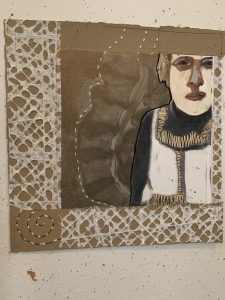
Warrior, Jean Cacicedo, 2024. Paper, printed. 15″x15″x1/2″
DAILY MANAGEMENT (HABITS)
- Rise slowly: pause sitting on the bed edge before standing; pause again before walking
- Sodium: 6–10 g daily helps retain fluid and support blood pressure (follow your doctor’s target, cardiovascular disease is affected by salt)
- Medications: Use a pill organizer vs taking meds from bottles so that you never lose track of what you’re taking. See medications below
- Fluids: 2–2.5 liters of water daily; drinking 500 mL quickly before standing can raise BP acutely; many people take electrolytes with this first water of the day
- Compression: waist-high compression stockings or abdominal binder are best, thigh-high next best, knee high better than nothing — put on before getting up if possible
- Meals: small, frequent meals; limit simple carbohydrates to reduce post-meal BP drops
- Heat: avoid hot showers, baths, and prolonged outdoor heat; use cool water; plan outdoor activity for cooler times of day
- Sleep position: elevate head of bed 10–20 degrees to reduce overnight BP fluctuation
- Quick fixes: if you feel faint, cross your legs, tense your leg muscles, or squat — these temporarily raise BP
- BP monitoring: Upper arm, validated device. Measure after 5 minutes supine, after 1-2 minutes sitting, 3 minutes after standing. Log everything (time, position, symptoms. Patterns are of utmost importance
- Exercise: Regular exercise is important in the overall management of PAF. Exercise in the presence of PAF is a real challenge. Do what you are able. Anything is better than nothing. Water-walking in diaphragm to waist deep water is a great way to extend how long you are able to exert yourself
- Safety: When feeling unsteady or likely to feel unsteady, use a walker or rollator. Make a personal commitment to sit down, even on a sidewalk when feeling faint. Don’t worry about appearances.
Note: PAF management requires balancing low standing BP against high lying-down BP. Medication changes should always involve your physician. See medication and blood pressure monitoring section in separate post.
| 🚨 RED FLAGS — Seek Emergency Care Immediately
● Loss of consciousness or fainting with injury ● Sudden severe headache (may signal hypertensive crisis) ● Chest pain or pressure ● Confusion, slurred speech, facial drooping, or one-sided weakness ● Fall with possible head injury or fracture ● Inability to urinate for more than 8 hours |
| For the ER: PAF patients may present with very low blood pressure on standing and very high blood pressure when supine. Both are features of the disease, not separate emergencies. Tilt the patient slowly. Avoid aggressive IV fluid boluses without monitoring. Contact the patient’s neurologist or autonomic specialist if possible. We made a laminated PAF and medication card to carry and show ER staff if necessary |
This guide is for general educational purposes only and is not a substitute for professional medical advice. Always consult your physician regarding your specific condition, medications, or treatment. Medical information changes frequently; verify drug names, dosages, and current guidance independently. The authors disclaim liability for any injury or damage arising from use of this information.