
Worthwhile to click this photo
Sometime around 1988 my mother was diagnosed with small cell carcinoma of the lung, a type of lung cancer with few survivors. At the time she was living in the small house we built for her behind our house in days memorable for their sweetness with David playing at Grandmother Mary’s house standing on a little step stool (the stool is in my utility room 40 years later) at her kitchen sink playing in the water, helping her cook, just being there and all of us having dinner together several times/week, hanging out in the back yard, hanging out at my Mom’s and Leslie’s and my house where in the living room we had taken some of the furniture out to fit in a giant (~7x4x4) heavy cardboard refrigerator box I’d gotten behind Weir’s Furniture store and cut a little door in to fit 2-3-4 year old children and there was a window and a blanket on the floor
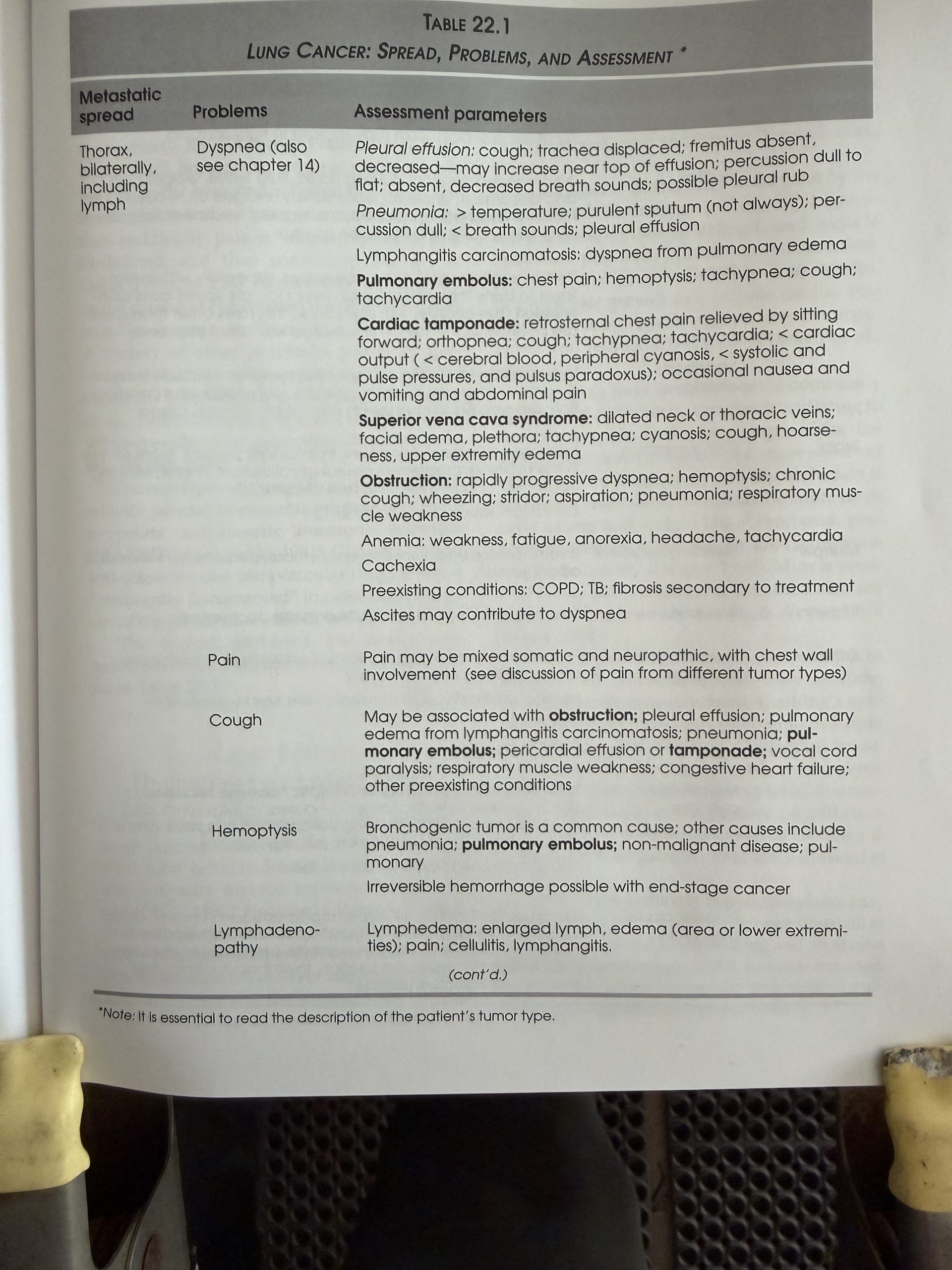
Lung cancer, natural history 1 (See multiple potential causes of difficulty breathing in lung cancer, some of which can be alleviated or even eliminated.)
inside and lots of pillows and stuffed animals – altogether a much better entertainment center than a TV! But back to my Mom and the book…
To her situation I brought some solid hospice experience, some good clinical skills and knowledge, some understanding of the end of life, and a commitment to take good care of my Mom. At the onset of all this I thought I would ramp up the care I would give by reaching a greater depth of understanding of lung cancer. My explorations evolved into a kind of chart that explicated what I thought of as the natural history of small cell carcinoma, including the most common sites of metastases, oncologic emergencies, and paraneoplastic syndromes. I consulted and clarified the chart throughout her illness and in at least one instance I was able to instantly identify and intervene in an oncology emergency (cord compression) before it became an emergency.
A few years after my Mom died (https://ckjournal.com/how-my-mom-died) I thought I would expand on what I’d done re the natural history of cancer. To that end I charted the natural histories of the 18 most lethal tumors leading to death in the US. Each tumor type was broken down into:
- Primary tumor
- Sites of metastases
- Problems related to the primary tumor and metastases
- Assessment parameters
(Later these tables were reproduced and further expanded in a series of articles in the American Journal of Hospice and Palliative Care.)
The tables anchored my book, Terminal Illness: A Guide to Nursing Care, published by J.B. Lippincott (1995, 1999). The book also explored individual and family responses to terminal illness, spiritual and cultural issues at the end of life, pain and other common physical problems, and diseases other than cancer encountered in hospice and palliative care. It took about two years to write.
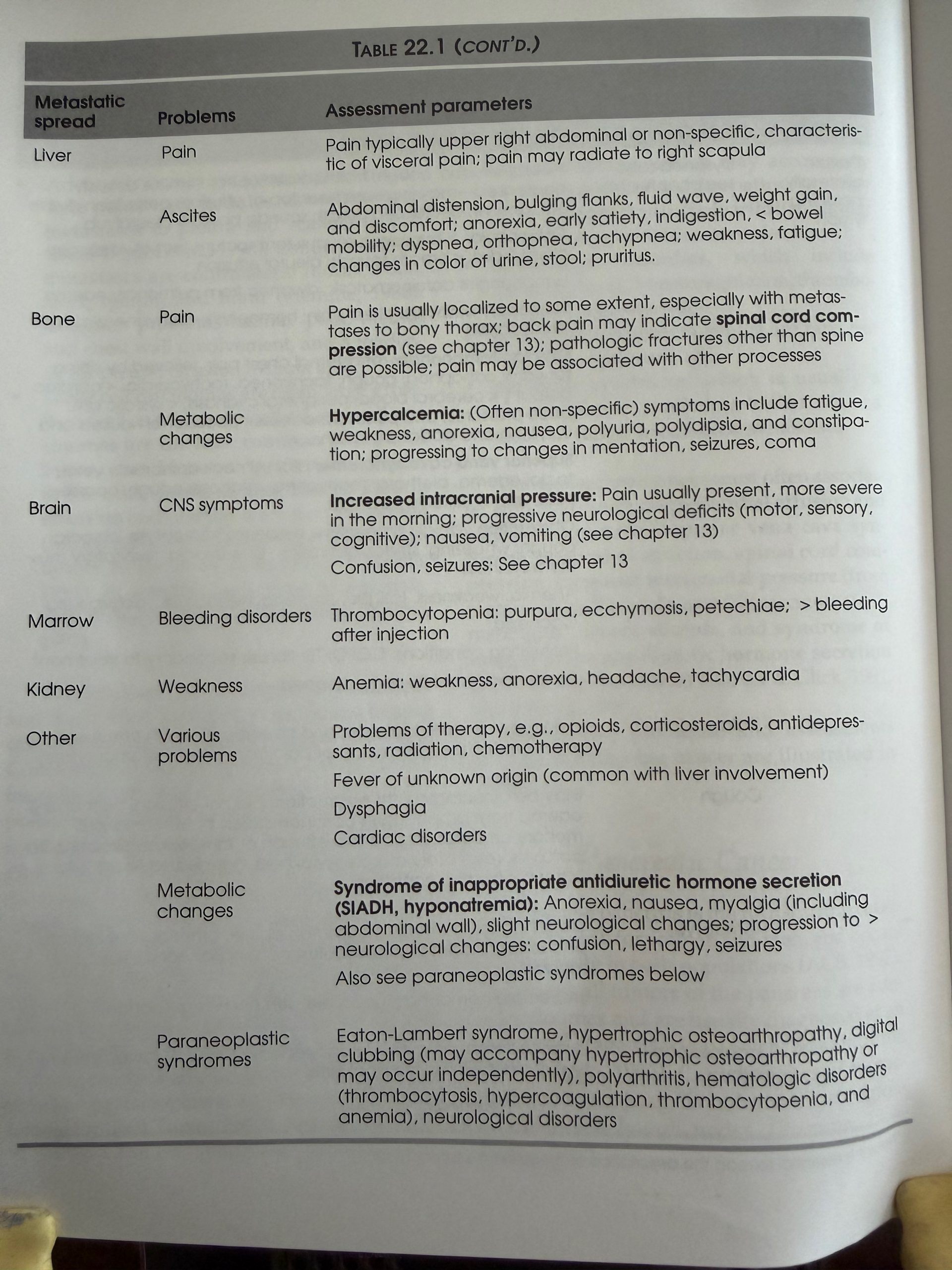
Lung cancer, natural history 2
The reason for writing the book was to improve the care of people at the end of life. It was intended primarily for hospice nurses and others working in hospice and palliative care, who, in the course of one week might see patients with cancers of the lung, colon, pancreas, head and neck, and someone with end stage myasthenia gravis. And in the next week see patients with cancers of the esophagus, prostate, ovaries, and so on. That’s a challenge to provide quality care to people with so many different problems! The book was a tool for doing quality care at the end of life, a tool for practicing loving kindness.